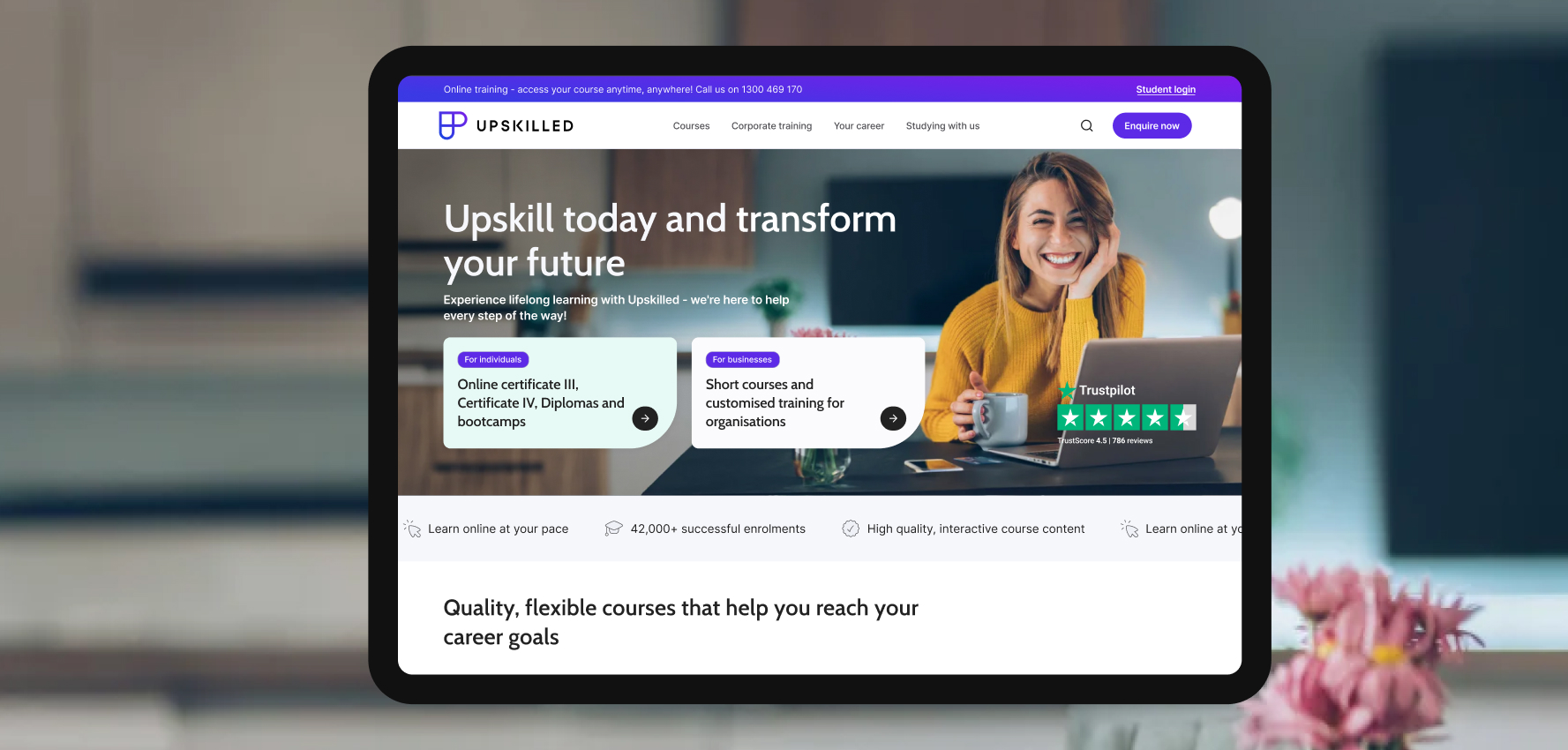
UpSkilled – bringing order to a massive website
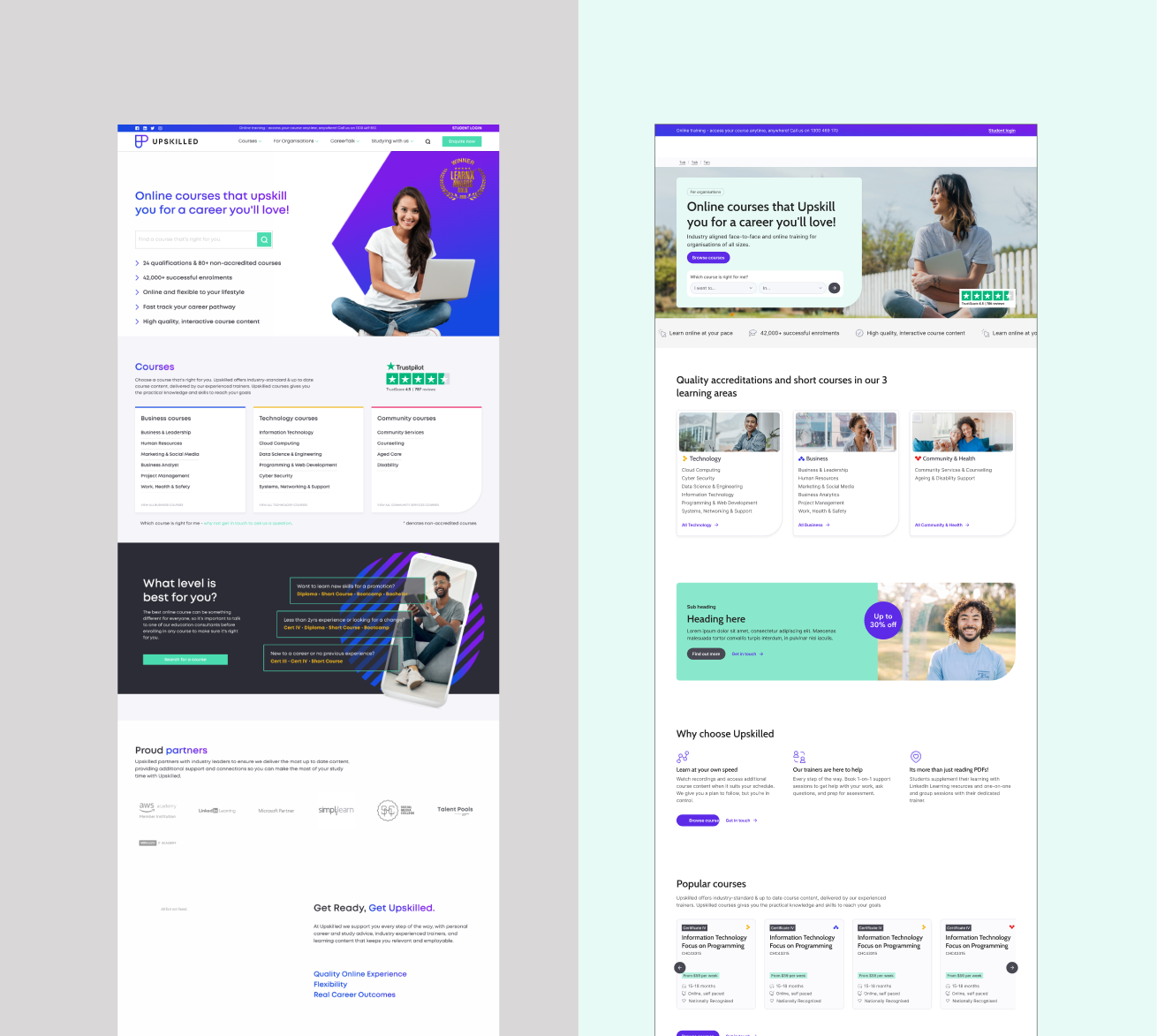
UpSkilled is a registered training organisation that built its name delivering accredited qualifications to individuals. In the last few years it evolved to offer short courses and training to businesses but the website didn’t clearly reflect the two sides of the business.
Not only did the legacy tech stack need replacing but there was an opportunity to redesign the whole site to represent the current business structure.
10 weeks
For full redesign
1500
Findable screens considered
12
Templates

Process
Two sessions to define what success looked like
Across two working sessions with the marketing manager, we unpacked the problems and how they wanted the site to serve the business and its users. Together we defined four success criteria:
- Position UpSkilled as experts for both businesses (short courses) and individuals (qualifications)
- Improve UX across the full site, not just a handful of landing pages
- Reduce unqualified leads and bad contact details reaching sales
- Design a site the marketing team could realistically sustain over time
There were two key constraints: organic search was the primary acquisition channel, with years of content invested in SEO, and existing chat and downloadable guides were converting well, so those flows couldn’t be disrupted.

Process
Name the problems before solving them
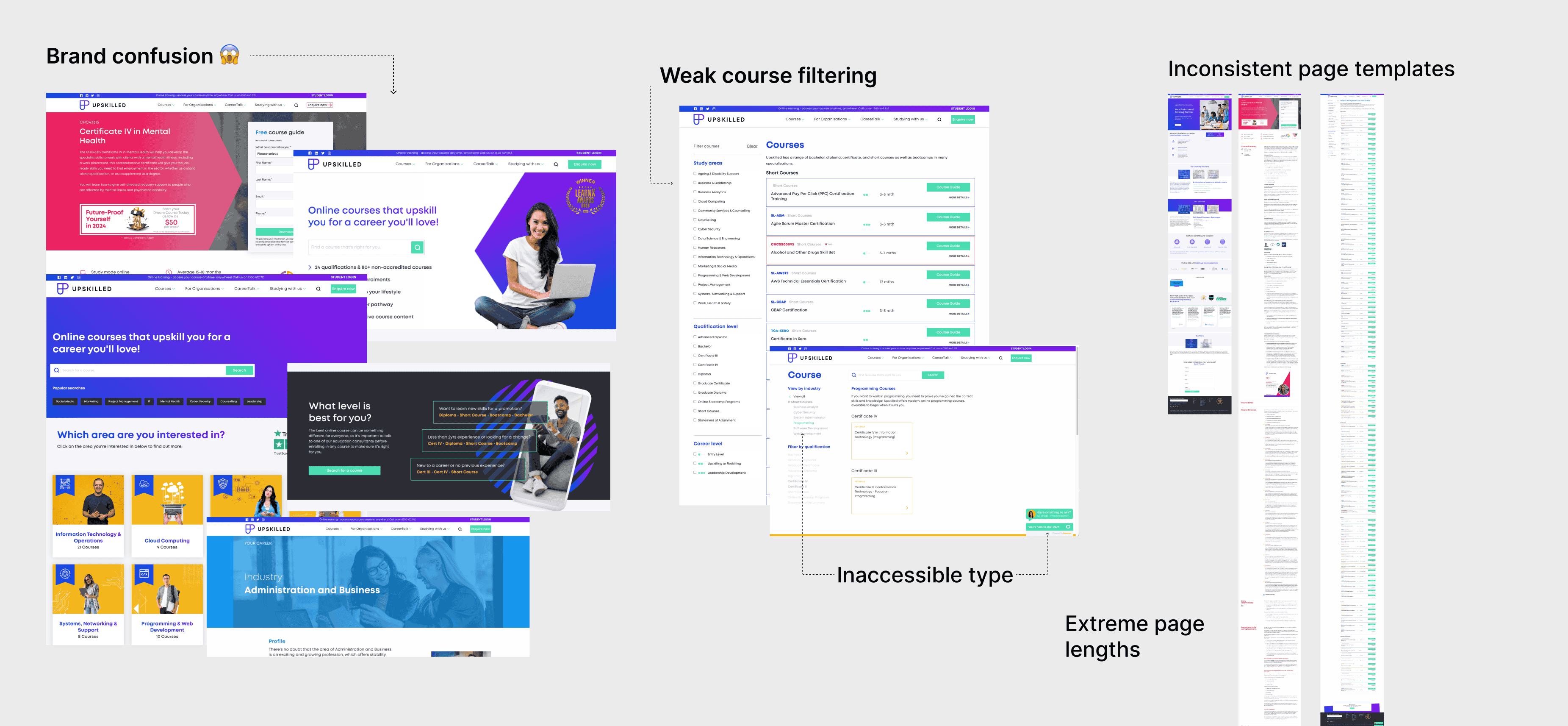
A site audit and heuristics review reframed the brief again. What initially looked like a visual inconsistency problem turned out to be structural too. With more than 1,500 findable pages, users were struggling to orient themselves.
Design approach
Structure before style
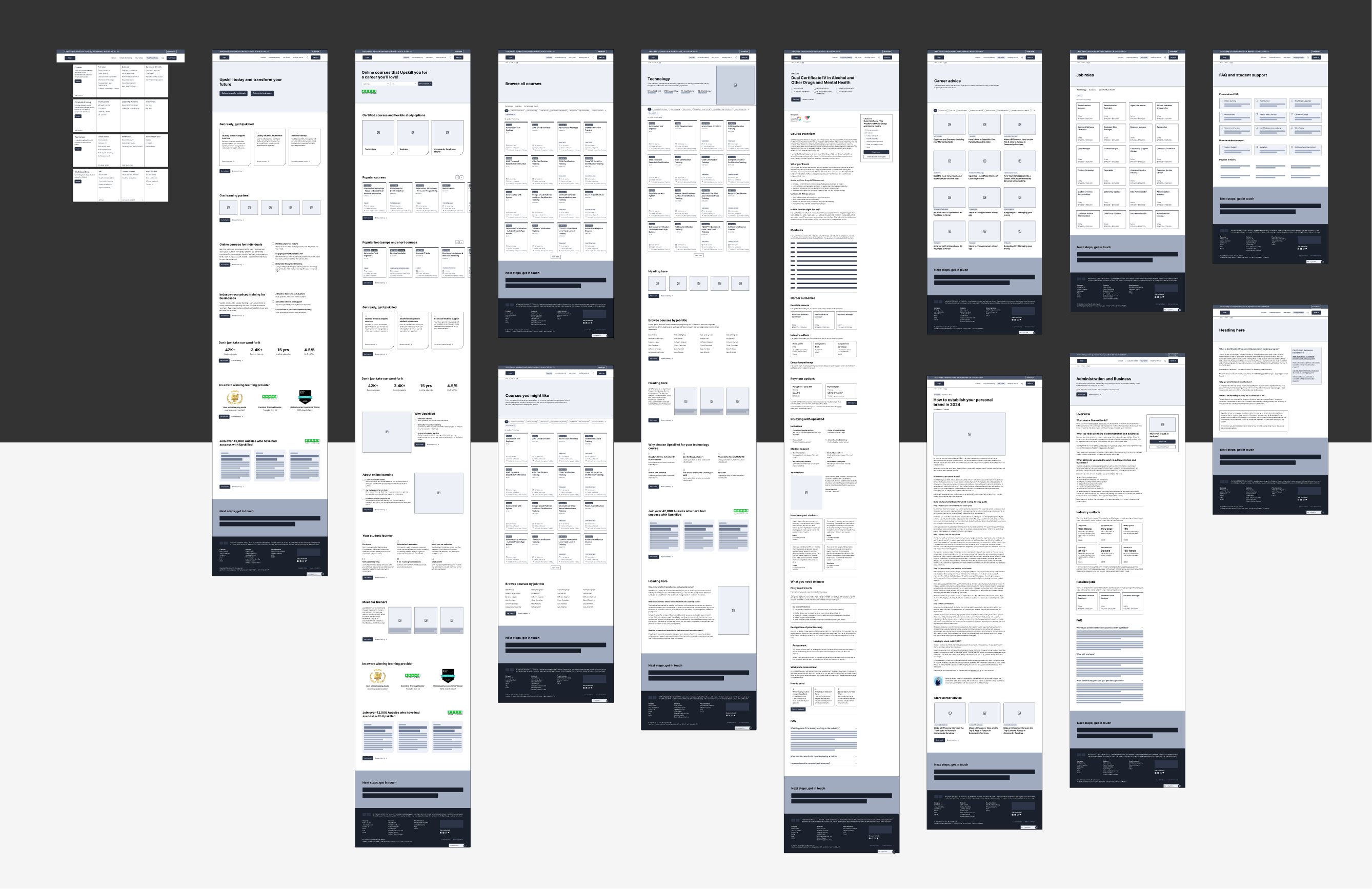
In this case, starting with wireframes was the most effective way to keep attention on structure and align stakeholders. The challenge was to make the sheer volume of content feel coherent.
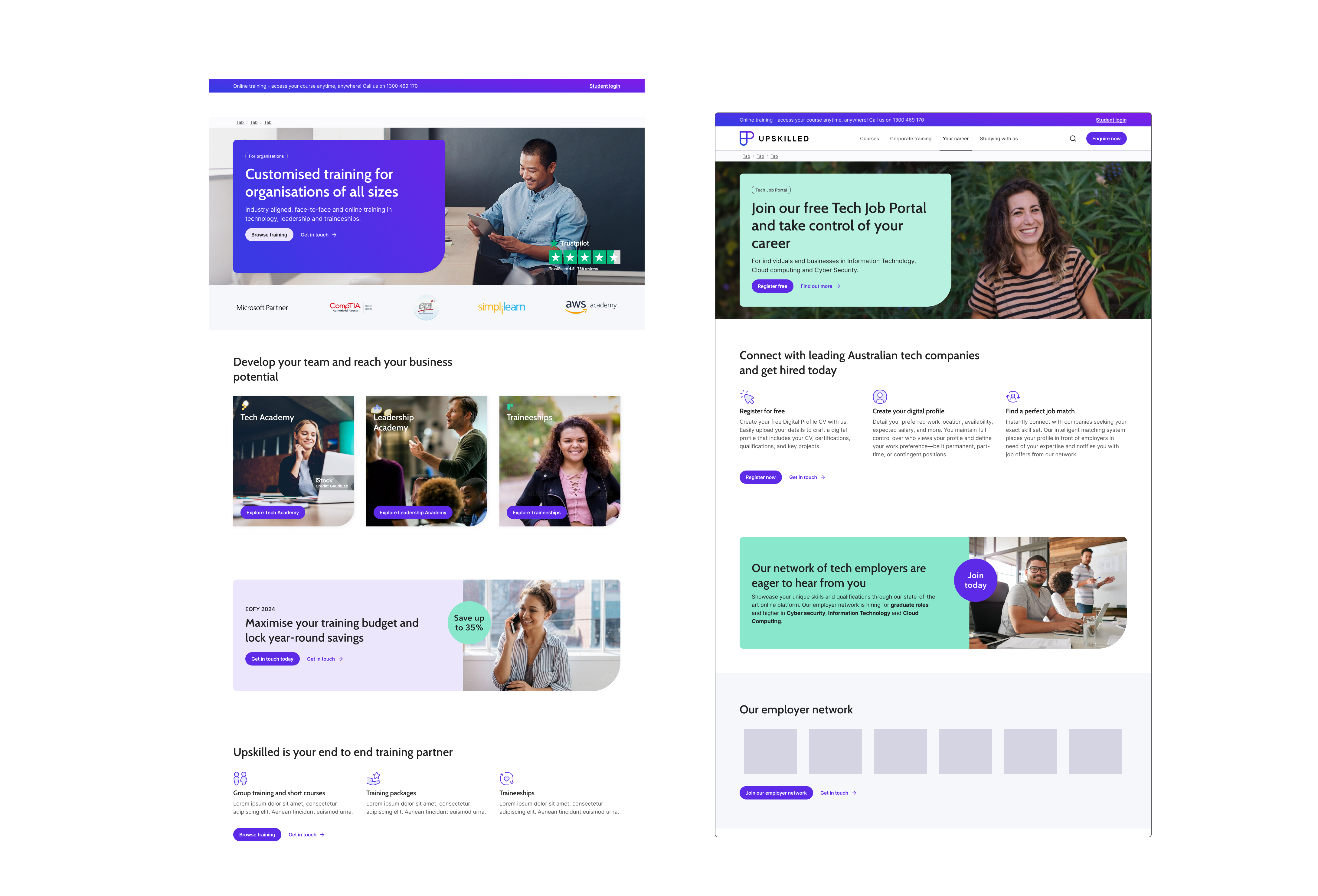
I prioritised navigation, filtering and templates with reusable structures. Templates needed to support long‑form content gracefully and scale across both B2B and B2C. Upskilled could keep their SEO advantage but users could explore without feeling lost or overwhelmed.
Design approach
Reusable everything
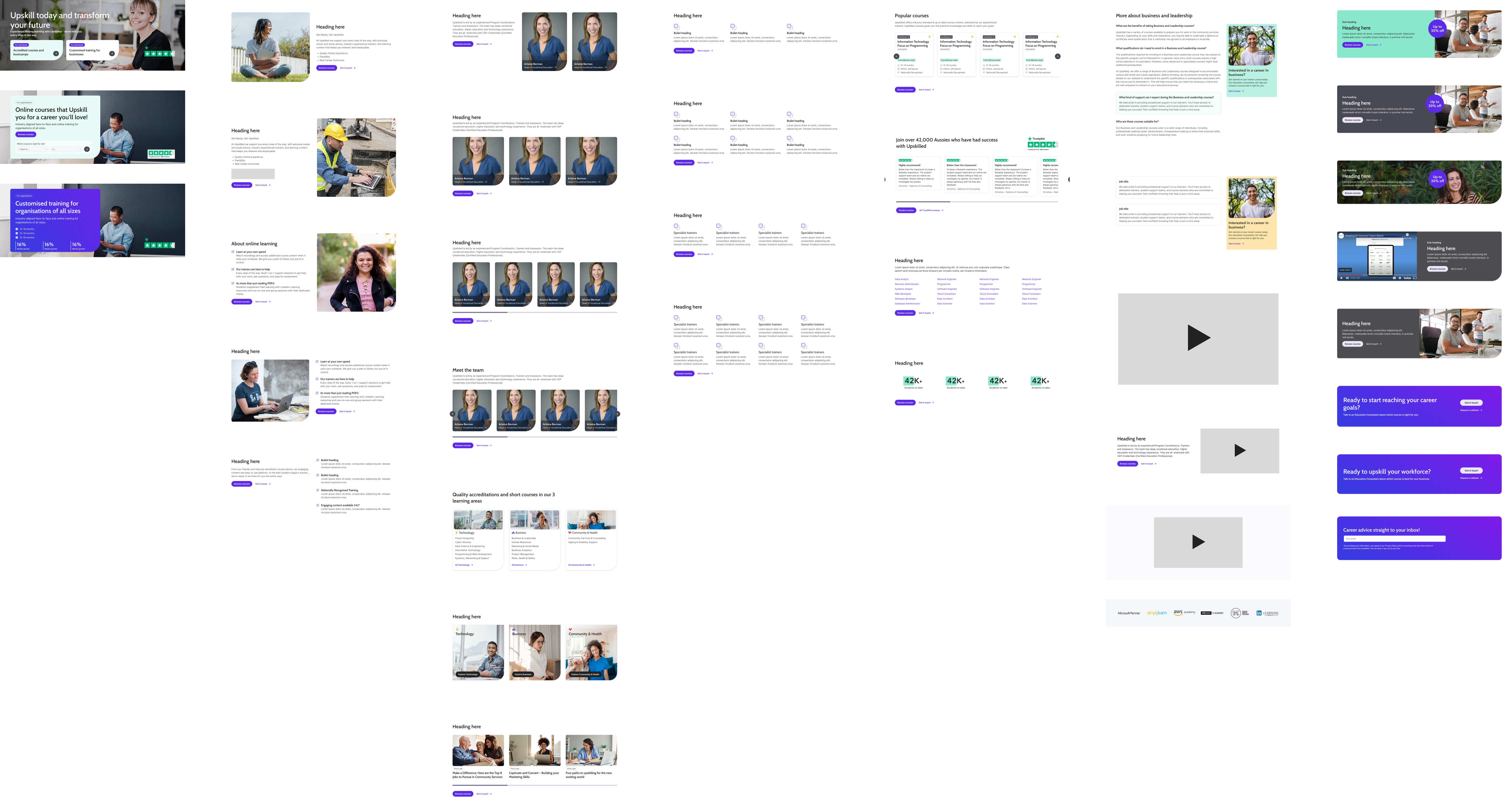
I designed a library of reusable components so any page could be assembled via the CMS without introducing visual chaos.
This gave the marketing team guidelines while still leaving room for creativity: new pages or campaigns could be created quickly, but always within a consistent system.
Design approach
Filtering
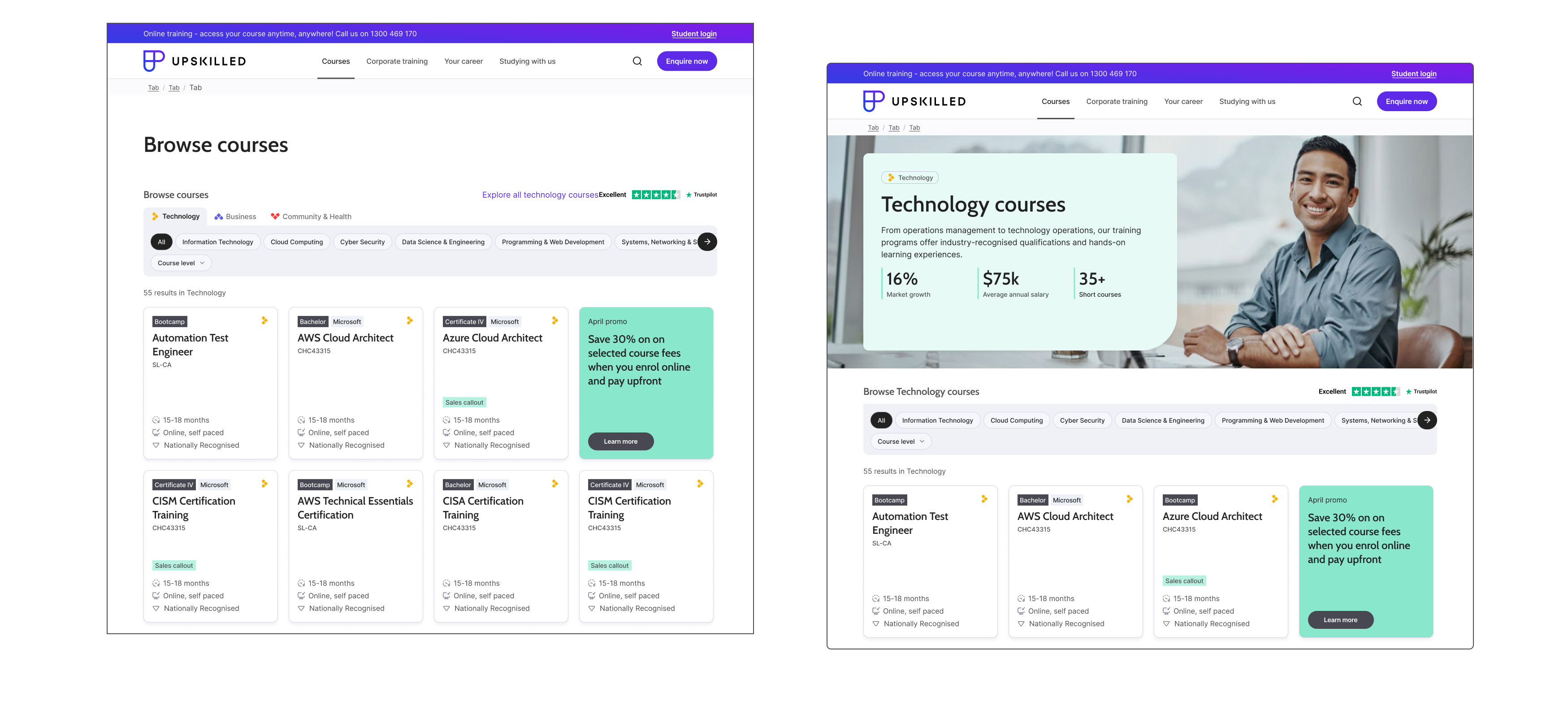
Better filtering gave users clearer ways into the course catalogue without needing to know exactly what they were looking for upfront. The goal was to make exploration feel guided, not random.
Design approach
Experience over formal testing
There was no time or organisational support for user testing. Instead, I leaned on my own experience. Testing would have added confidence to specific details, but experience provided the speed and directional clarity the timelines required.
Design approach
Leaving the team with tools, not just a website
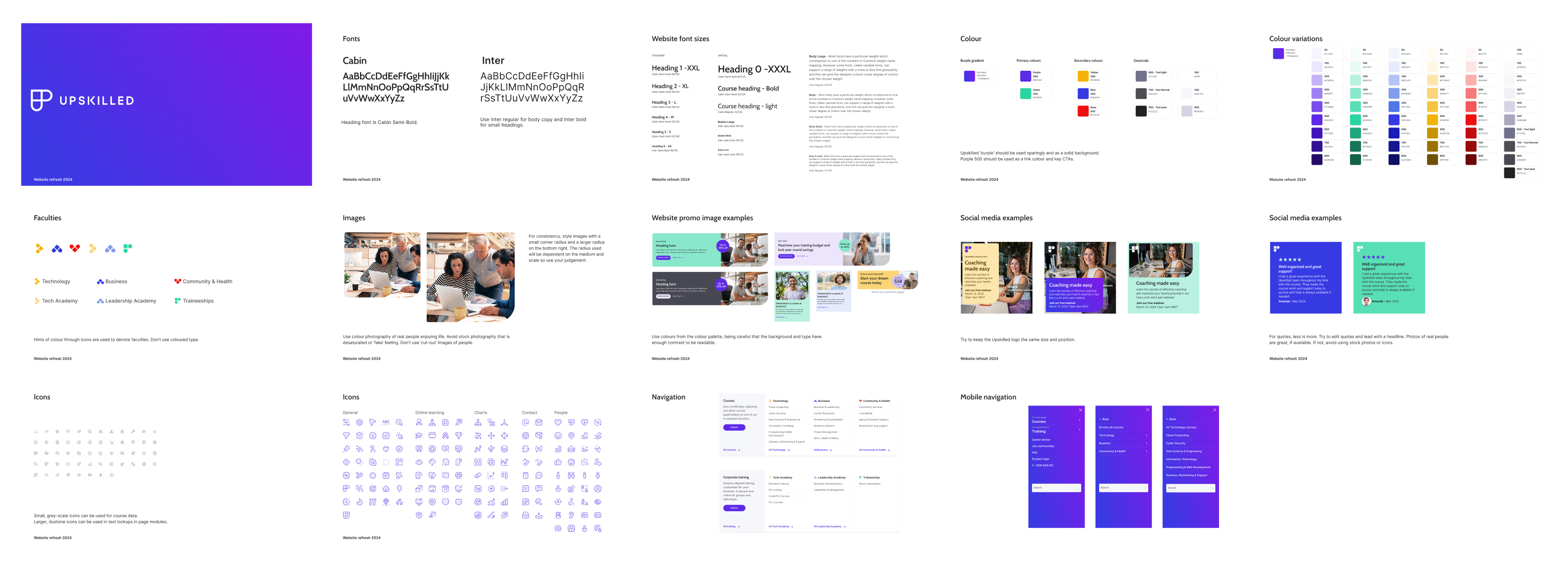
A redesign only holds if the team can maintain it. Alongside dev‑ready Figma files, I created a visual style guide for the marketing team a reference point for anything built after handover.
New pages, campaign assets and future updates could stay on brand without needing a designer in the room.
Outcome
Dev ready in 10 weeks
The dev‑ready design was delivered in ten weeks. Years of accumulated inconsistency were replaced with:
- A unified visual language
- A scalable template and component system
- Clear patterns for both B2B and B2C journeys that the team could build on
SEO‑critical content remained intact and the structure around it finally matched the quality of the business offering.
Just wanted to thank you for your help and work. Everyone loves the new site and its simplicity.
Head of Marketing, UpSkilled

