NSW Telco Authority – making a useful intranet
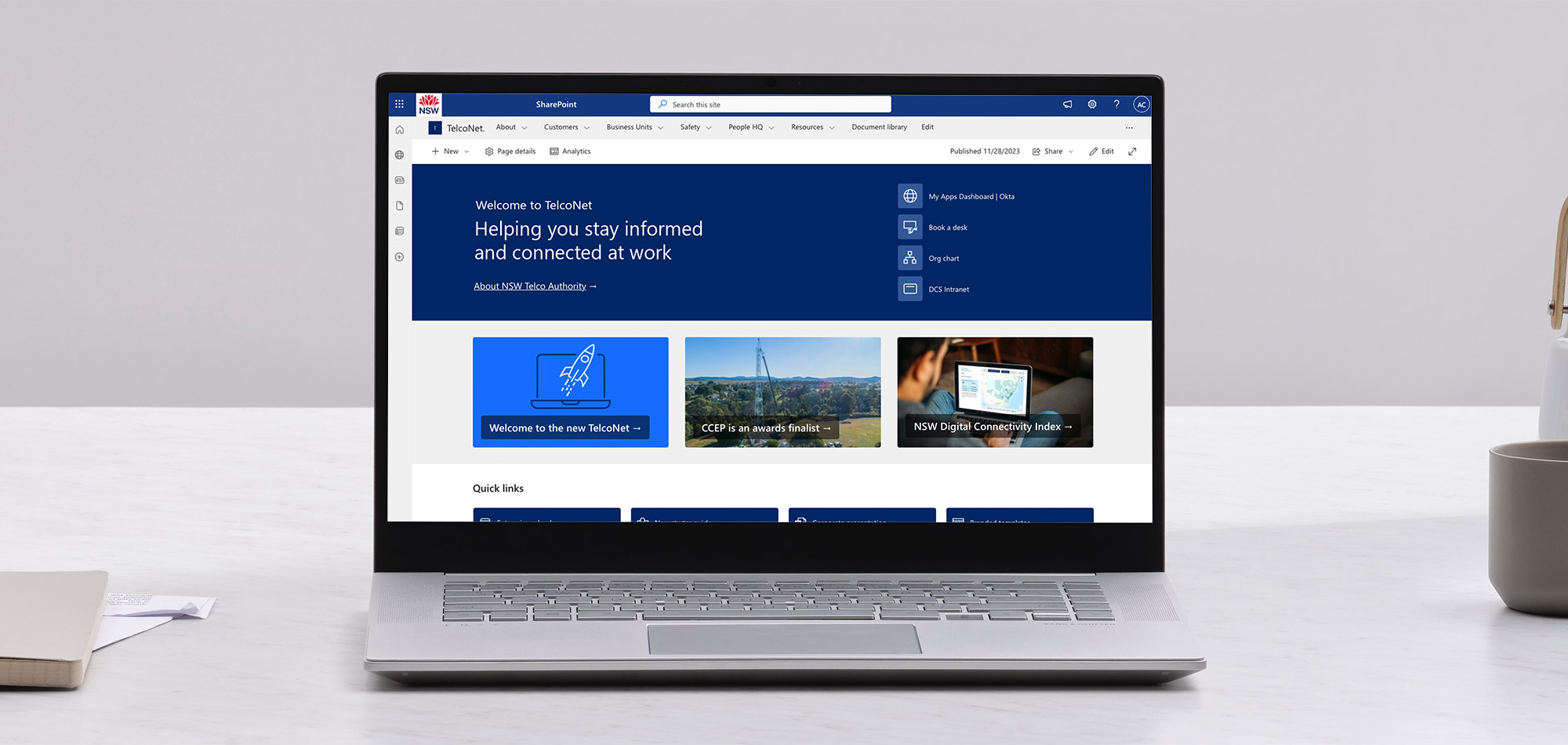
NSW Telco Authority delivers critical radio communications to first responders and essential services across NSW. With around 400 staff, the intranet should have been a core operational tool, but the relatively new SharePoint site was attracting negative feedback and low engagement.
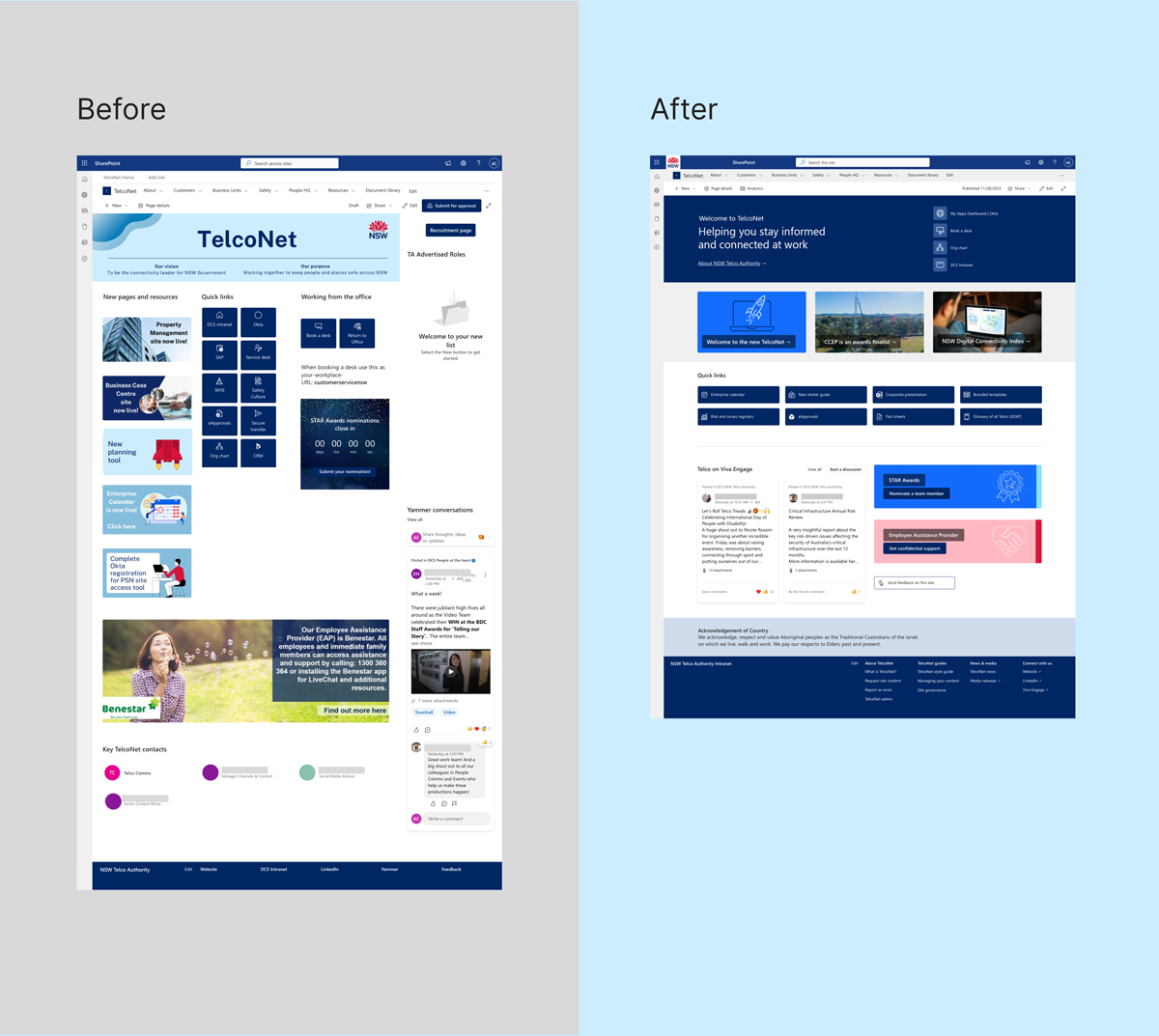
I led a six month UX discovery, redesign and implementation with two goals: lift day‑to‑day engagement and reduce the maintenance burden on the internal team so the intranet could stay useful over time.
54
Stakeholders interviewed
32
PDFs retired
48
Pages migrated
3
Governance documentation

Process
Five phases across six months
Each phase had a stakeholder checkpoint before moving forward.
Discover →
- Kickoff workshops
- Convene working group
- Stakeholder mapping
- Ecosystem mapping
- Technical outreach
- Project plan
- Checkpoint
Research →
- Content audit
- UX audit
- Analytics review
- Stakeholder interviews
- User interviews
- Survey
- Best practice research
- Technical outreach
Analyse & ideate →
- Affinity diagramming / clustering
- Information architecture
- Ideation
- Feature feasibility and prioritisation
- Custom component research
- Checkpoint
- Distribute content requests
Design →
- Wireframing
- Hi-fidelity mockups
- Prototype
- Templates in dev site
- User testing
- Graphic designer collaboration
- Test and iterate
- Test and iterate
- Checkpoint
- Feedback integration
Implement
- Migrate content
- Copywriter collaboration
- Content owner collaboration
- Governance documentation
- Training videos and docs
- Visual style guide
- User testing
- Checkpoint
- Accessibility checks
- Go live
- QA
- Launch
- Content owner drop in sessions
Process
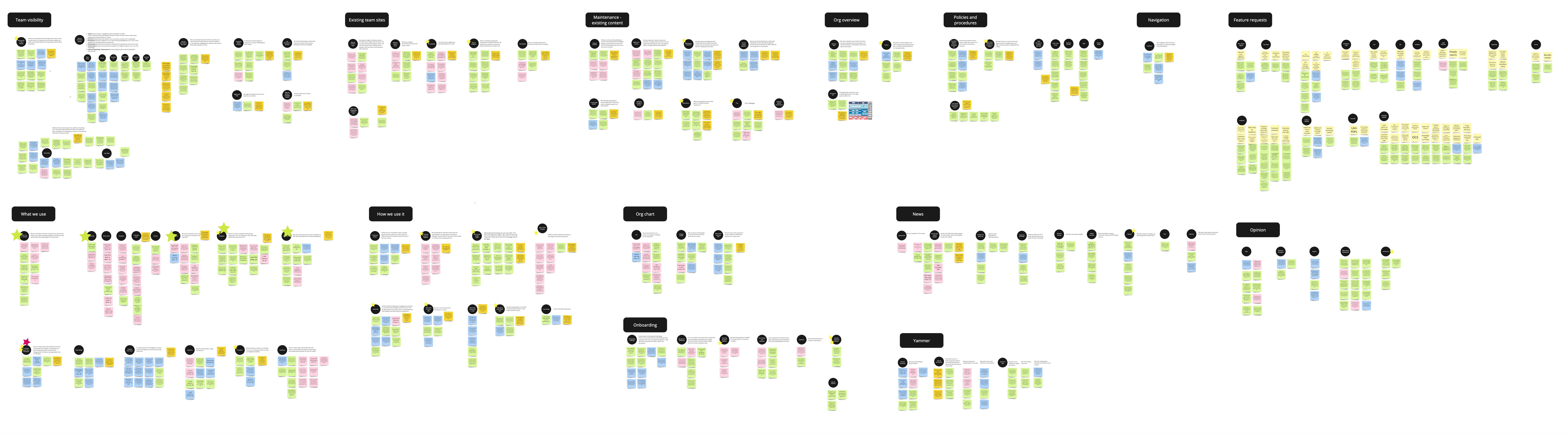
50 stakeholders interviewed over 37 meetings
The research sessions confirmed the intranet was valued but not working. I presented the key findings, including the need for clear ownership, back to senior leaders for buy in. Stakeholder support was key to the ongoing success of the platform.
Key insight
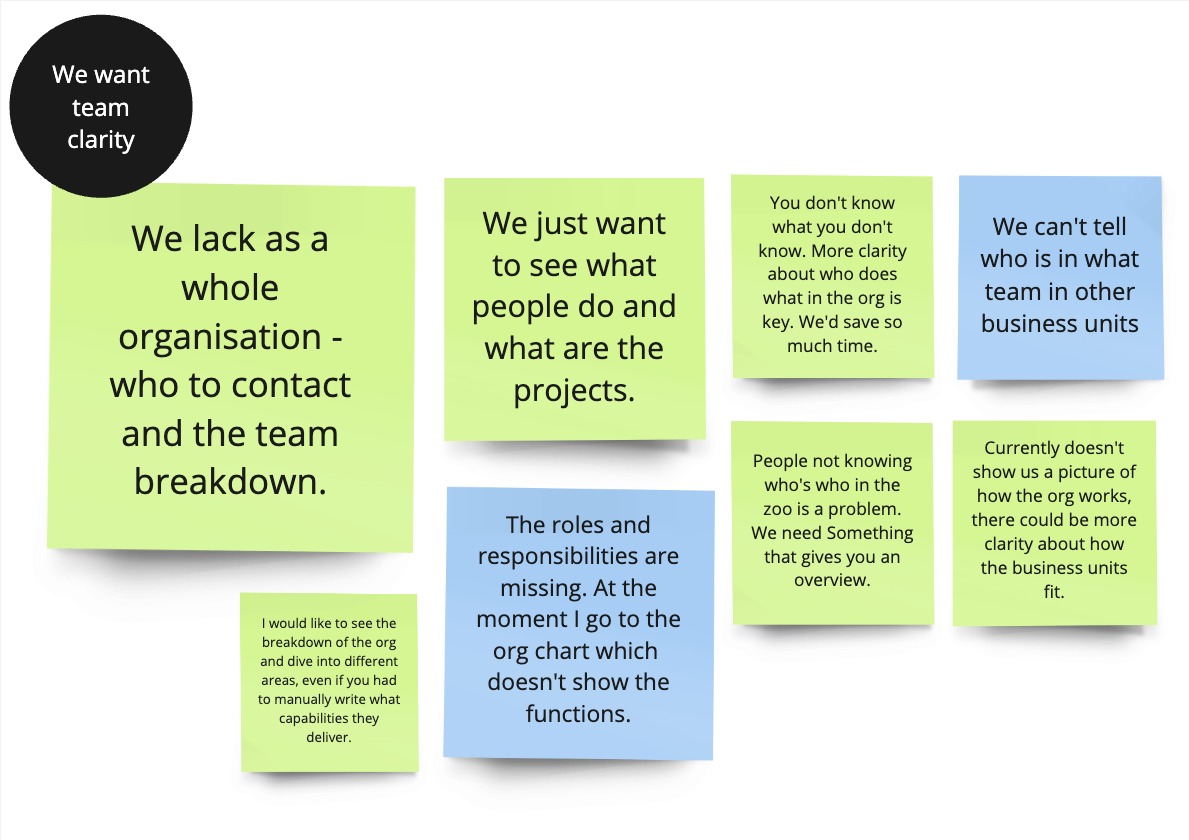
We want organisational clarity
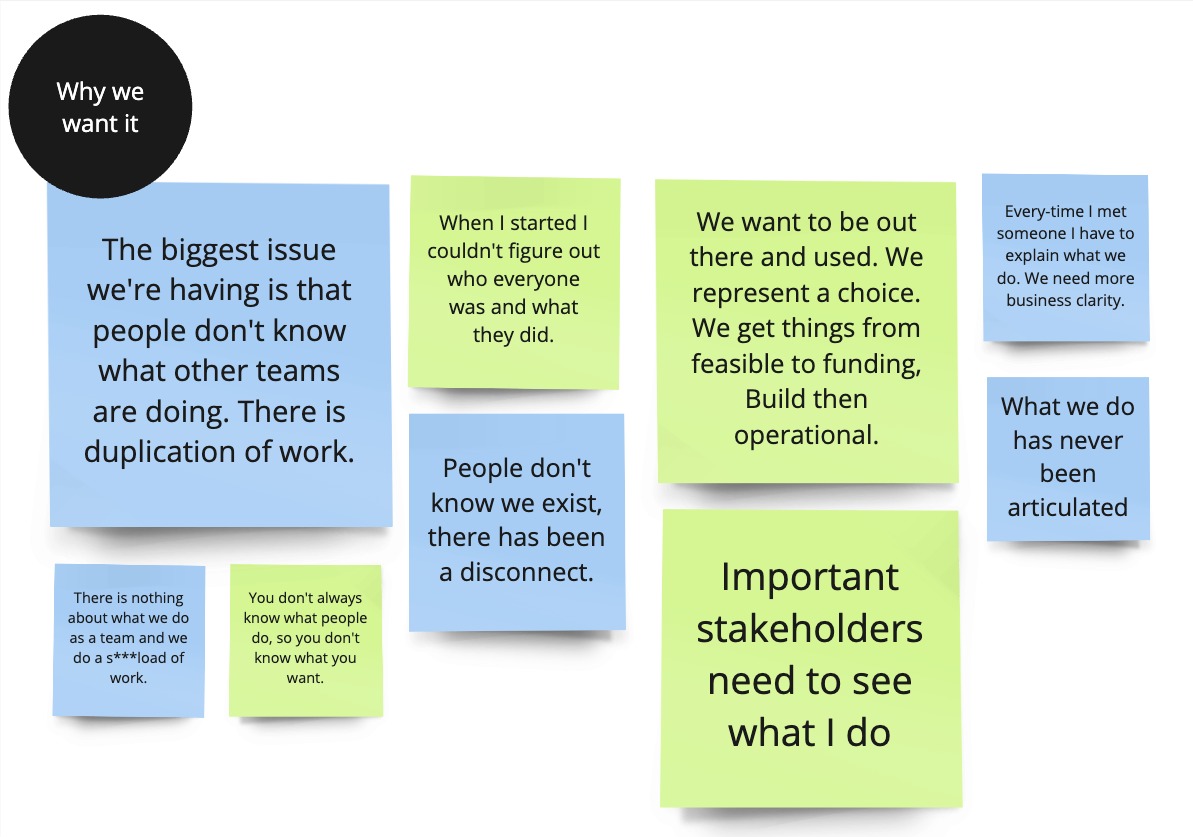
Around 90% of participants reported wanting greater organisational clarity, from high‑level overviews to clear team capabilities and contacts. Staff were spending time asking around for basic information instead of being able to find it themselves.
Key insight
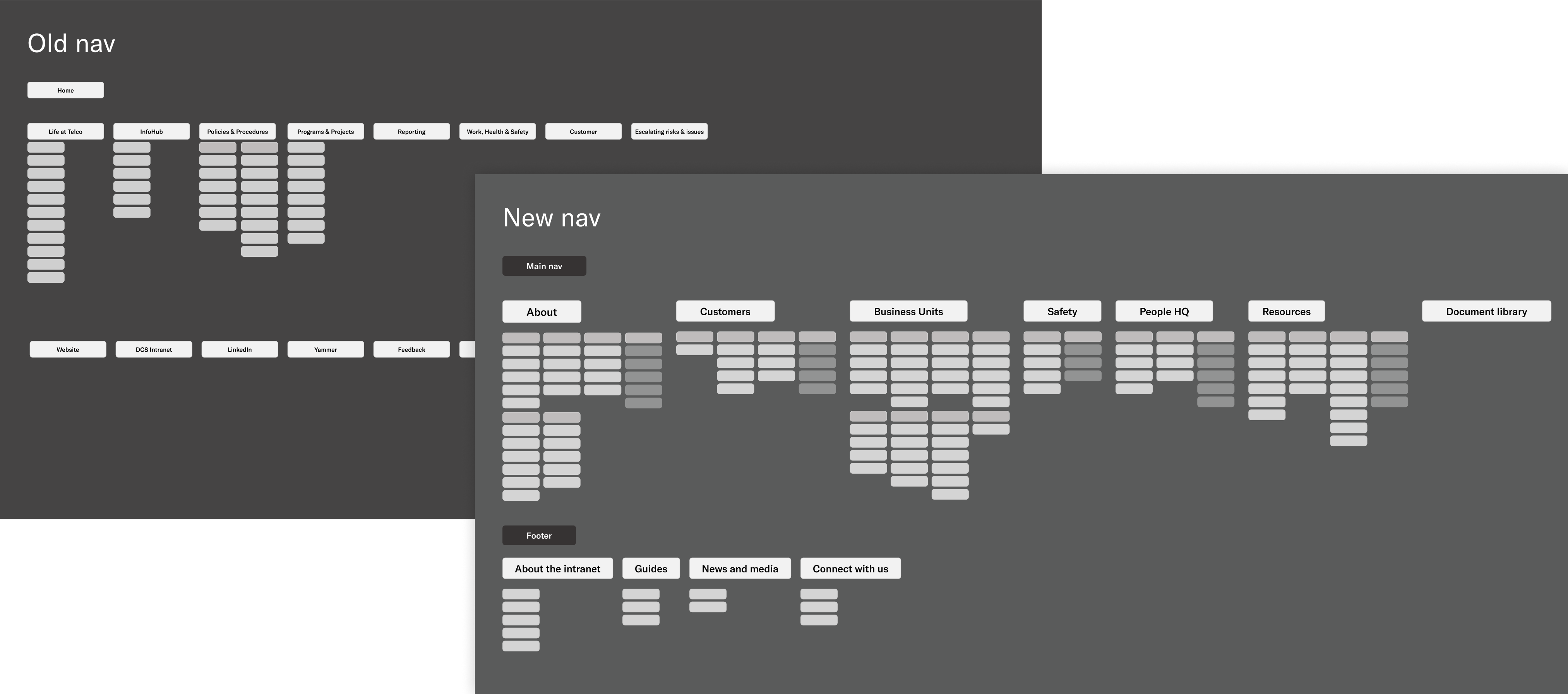
There is lots on there but it’s hard to find anything
Most people had simply memorised where things lived rather than being able to find them intuitively.
SharePoint’s flat page structure didn’t help: no breadcrumbs, no active states and no dynamic sub‑navigation meant standard wayfinding patterns weren’t available out of the box.
The new navigation needed to be structured enough to handle a complex organisation while flexible enough to grow without breaking. To offset SharePoint’s limits, I designed consistent page templates, clear link types and simple navigation groupings so content felt predictable even as it changed.
Key insight
Inconsistent onboarding lead to disengagement
Inconsistent onboarding kept surfacing as a pain point connected to the other findings.
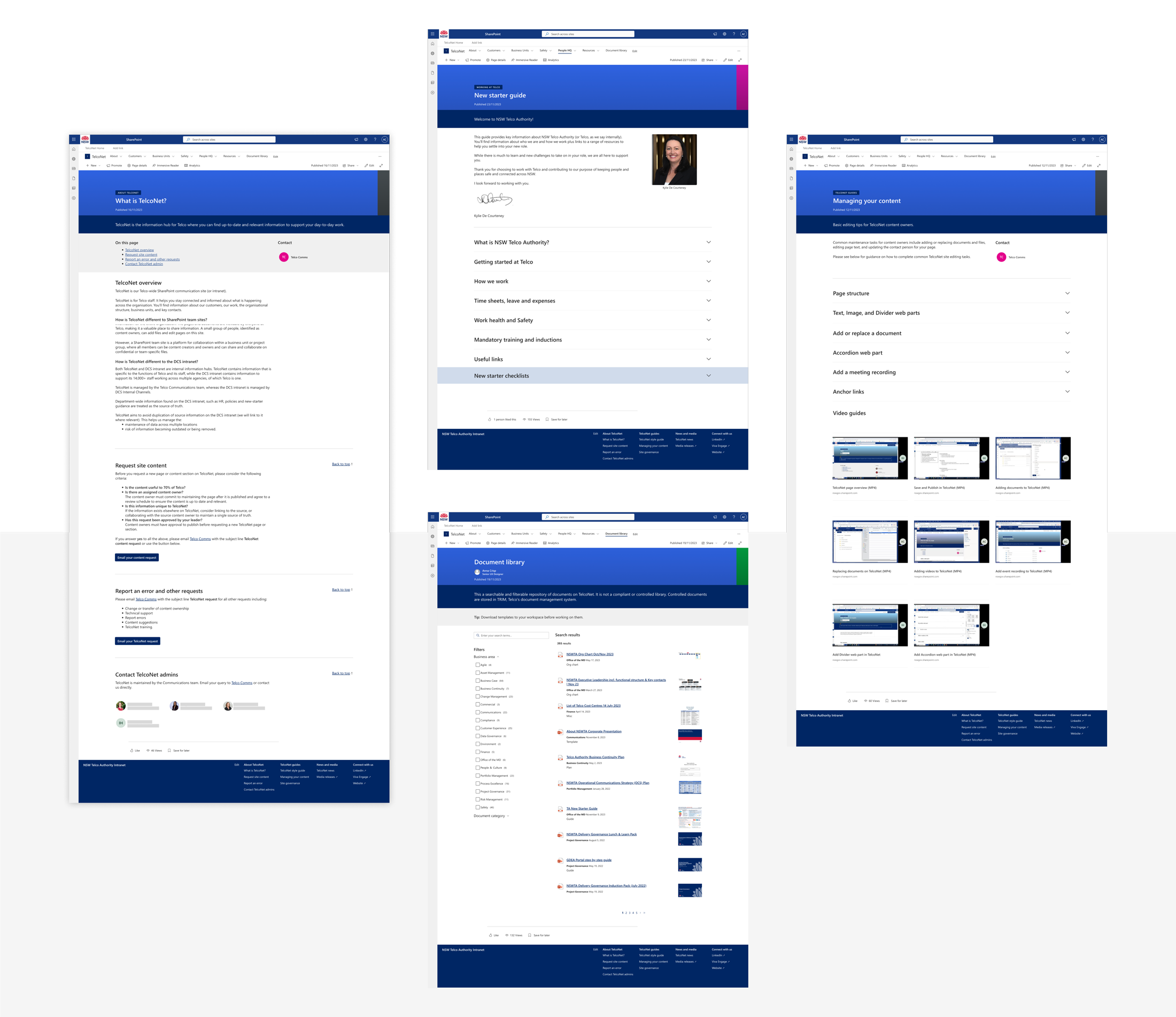
Working closely with the Office of the Managing Director, I consolidate multiple static PDFs into a single online onboarding guide. Hiring managers could now point new starters to one place and trust they’d get a solid overview of the organisation, key teams and tools, lifting the baseline knowledge from the start.
Design principle
Build for longevity, not just launch
Testing and research made one thing clear: a pragmatic, out‑of‑the‑box approach would outlast an ambitious custom one. With limited internal design capacity, the organisation didn’t need another digital asset that was hard to maintain, it needed something teams could own confidently.
Core design principles:
- Structured web content instead of PDFs
- Clear link types for documents, tools and external sites
- Simple patterns any team could maintain
- A named content owner on every page
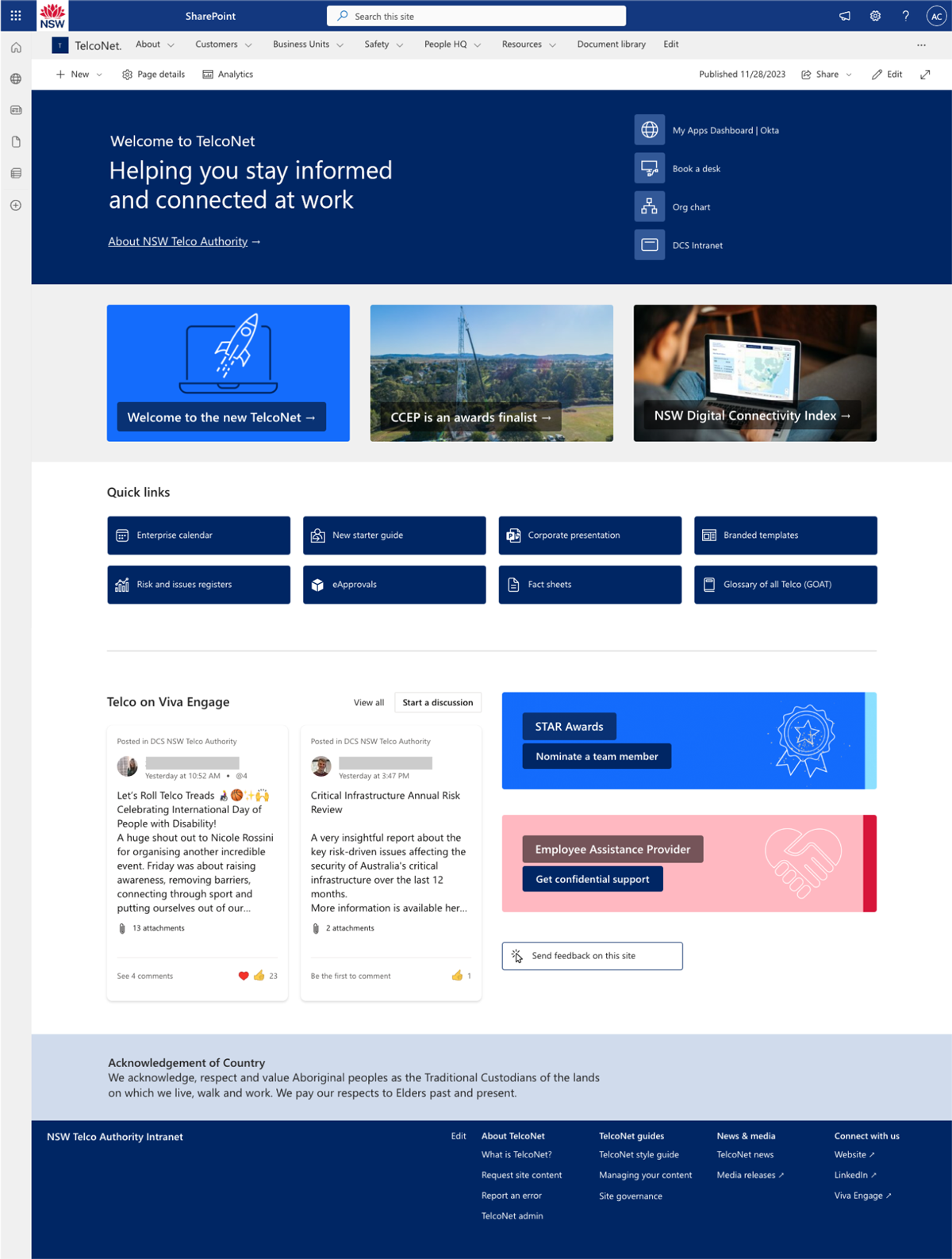
On time and well recieved
The refreshed intranet launched on schedule. While analytics were limited in the immediate window after go‑live, feedback from staff and leaders shifted from frustration to confidence that the intranet had a clear role and was easier to navigate.
Content owners reported they were comfortable updating their sections using the templates and guidance provided, and senior leaders began treating the intranet as the default place for organisational updates. Governance and training materials were handed over so the internal team could maintain and improve the site over time, which was always the goal.
Anna’s UX insights and digital design skills were invaluable over the last six months, as was her cool, calm, collected and considered approach to simplifying the complex and solving problems.
Dave Morrant, Director Customer