NSW Telco Authority, making the intranet a more useful resource
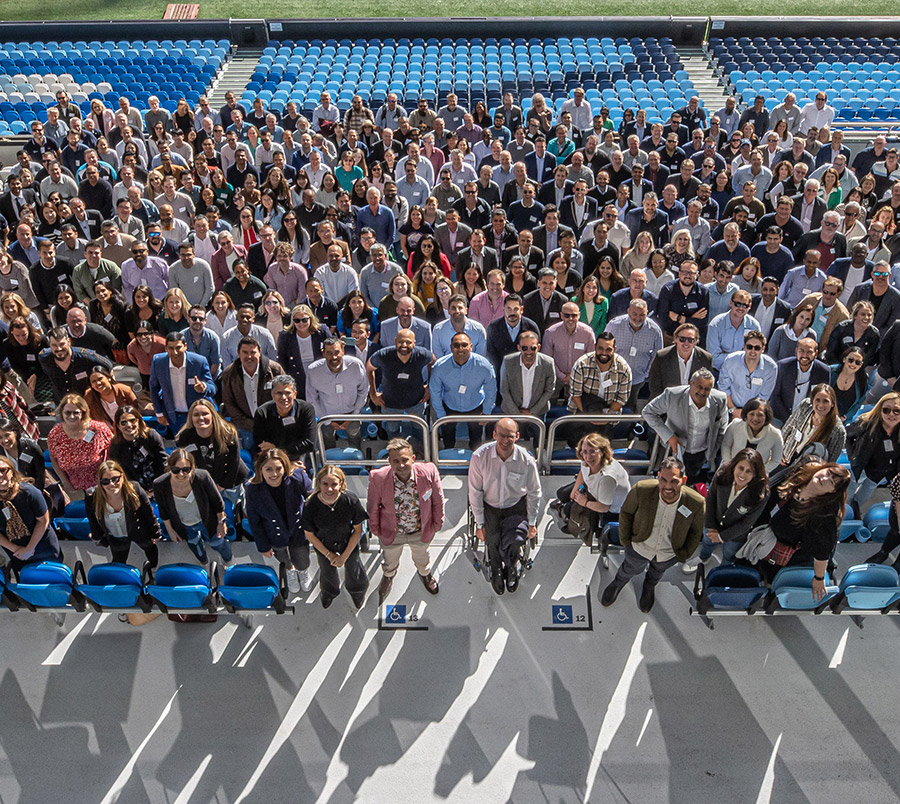
NSW Telco Authority is a 400 person organisation within the Department of Customer Service. They deliver critical radio communications to first responders and essential services to keep people and places in NSW safe and connected.
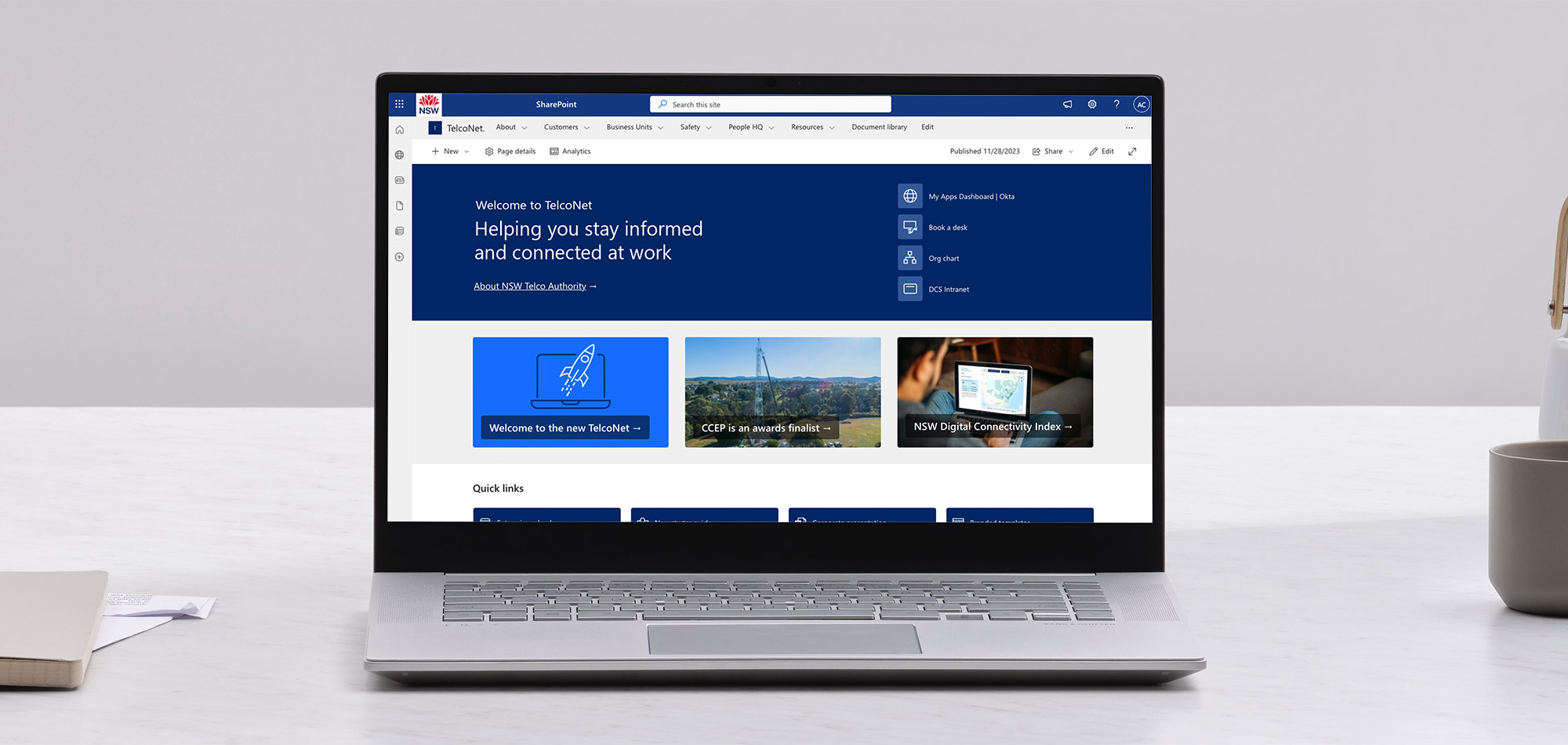
The Telco SharePoint intranet was only 18 months old but it was receiving negative feedback and low engagement. Leadership saw value in the site but the team in charge was struggling to make the navigation and layout changes required to make it a useful resource Telco wide. I was engaged full-time for 6 months to refresh the site.
Undertake a full UX process from discovery and research through to design and implementation with the aim improve engagement and perception.
Scope
Stakeholder and user interviews
Stakeholder engagement
Workshop facilitation
Visual design
SharePoint development
Training documentation
Governance documentation
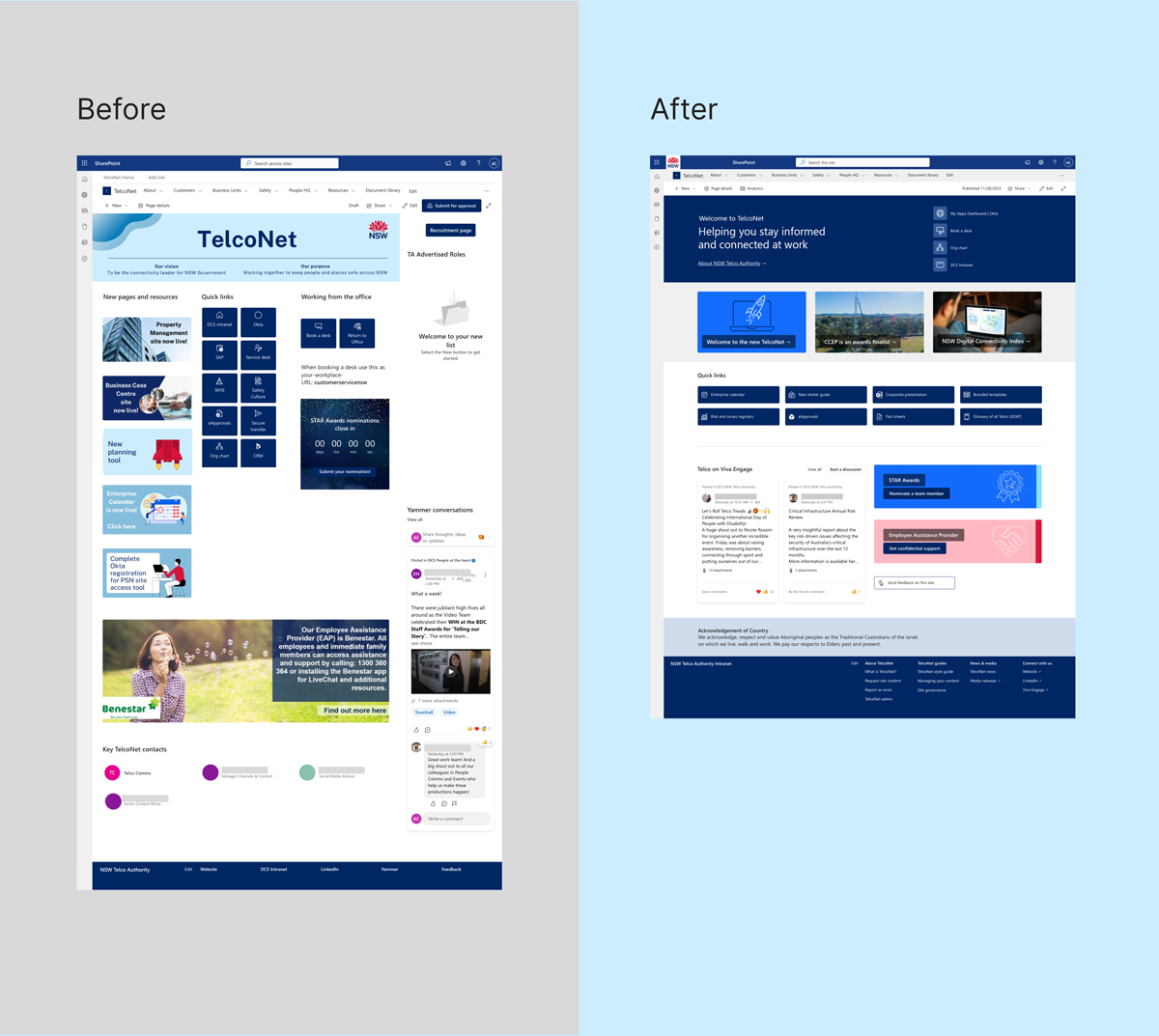
Process
Discover →
- Kickoff workshops
- Convene working group
- Stakeholder mapping
- Ecosystem mapping
- Technical outreach
- Project plan
- Checkpoint
Research →
- Content audit
- UX audit
- Analytics review
- Stakeholder interviews
- User interviews
- Survey
- Best practice research
- Technical outreach
Analyse & ideate →
- Affinity diagramming / clustering
- Information architecture
- Ideation
- Feature feasibility and prioritisation
- Custom component research
- Checkpoint
- Distribute content requests
Design →
- Wireframing
- Hi-fidelity mockups
- Prototype
- Templates in dev site
- User testing
- Graphic designer collaboration
- Test and iterate
- Test and iterate
- Checkpoint
- Feedback integration
Implement
- Migrate content
- Copywriter collaboration
- Content owner collaboration
- Governance documentation
- Training videos and docs
- Visual style guide
- User testing
- Checkpoint
- Accessibility checks
- Go live
- QA
- Launch
- Content owner drop in sessions
Project kickoff
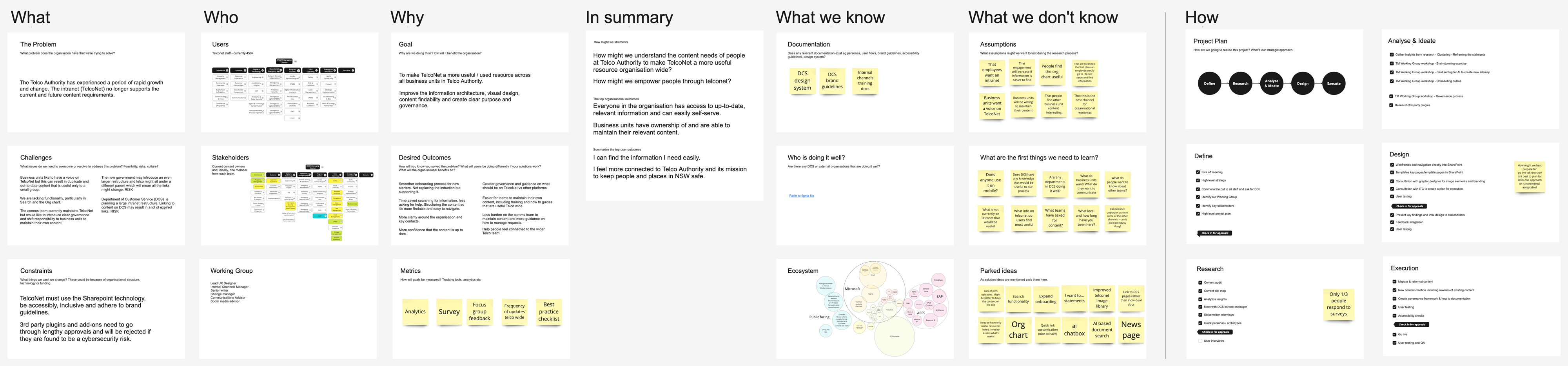
The project kick-off board was key to recording the project’s background, challenges and goals. I worked closely with the Internal Comms Manager and Change Manager to refine the board over two workshops. It continued to be an evolving and useful resource throughout the project.
The problem
An internal survey in late 2022 revealed wide spread frustration and low usage of the intranet. The organisation had been through a rapid period of growth and the intranet was no longer meeting it’s content requirements.
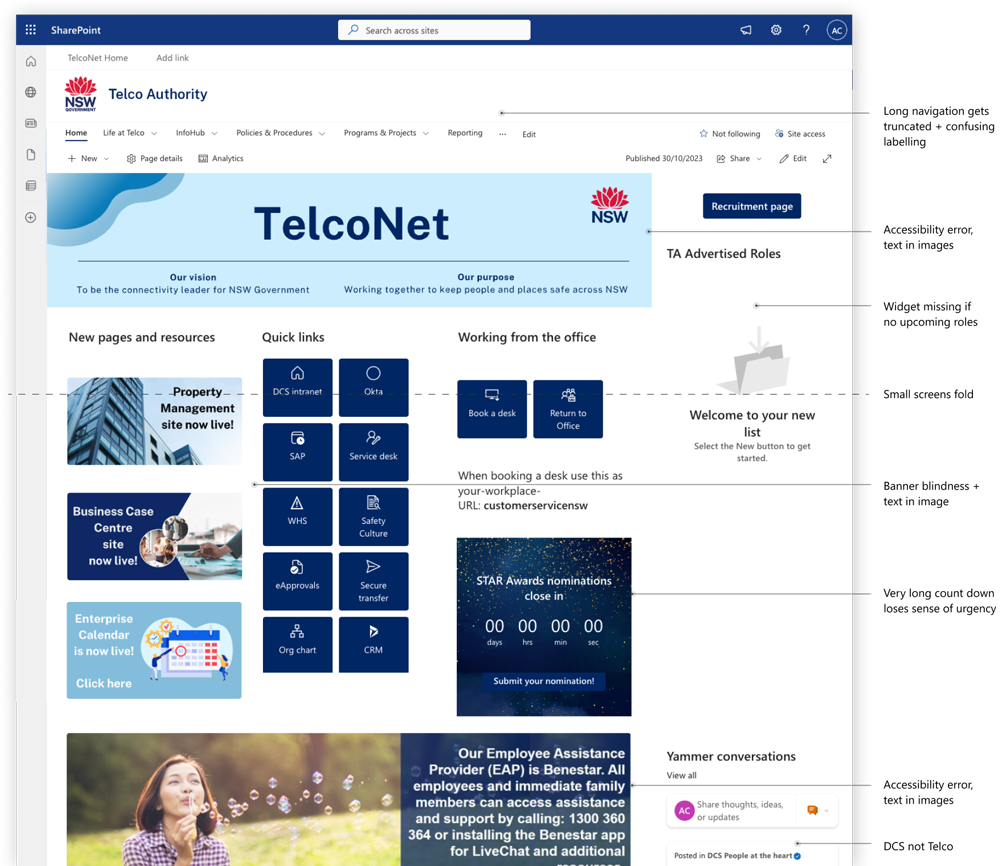
A UX audit showed some obvious problems – the information architecture was confusing, the visual design lacked cohesion and pages could be long and cumbersome.
The team maintaining the intranet reported that it had become difficult to keep up to date and they wanted to shift the burden of maintenance to content owners. They reported a lack of clear purpose, process and governance.
UX audit
Stakeholder interviews
Before diving into solutions we needed to know assumptions were correct and what people in Telco actually wanted.
I interviewed 50 stakeholders and users in 37 interviews. I prepared a script but allowed for flexibility to account for a variety of participants. We wanted to know what they used, how often they used it, how they navigated the site and how they thought it could be more useful in their role and as an employee. I made audio recordings of the sessions and transcribed notes in Miro.
Over the course of the interviews archetypes started to emerge. These weren’t a formal part of the UX documentation but they helped me categorise stakeholders and understand their motivations.
Archetypes

How might we understand the needs of people at Telco to make the intranet a more useful resource?
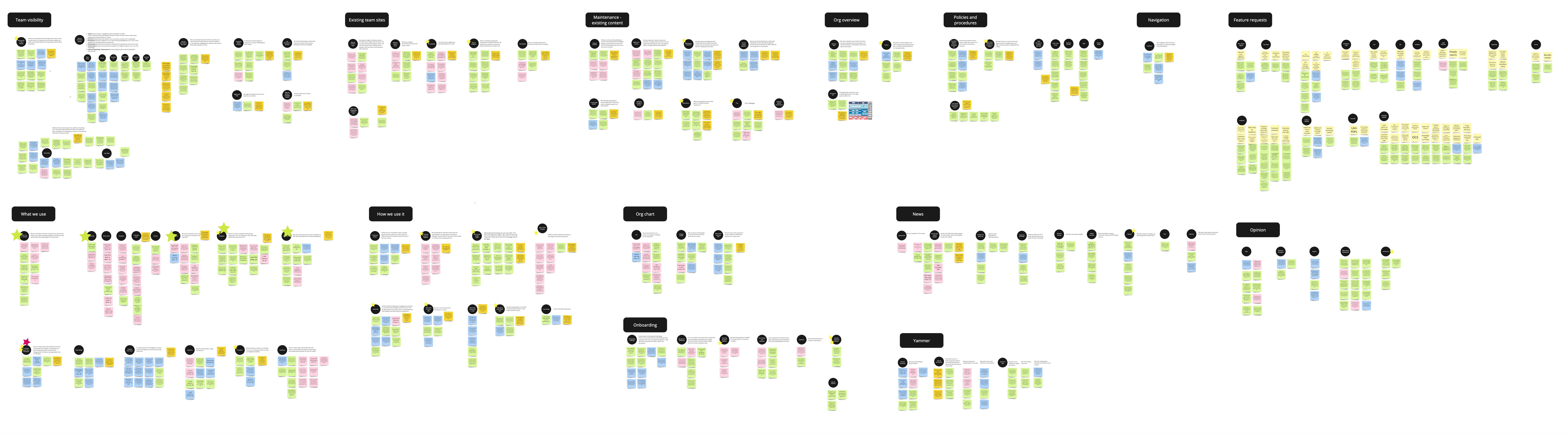
With our main How Might We (HMW) in mind I clustered the research data to identify key themes. From the themes I rephrased the statements and created HMWs.
Clustering
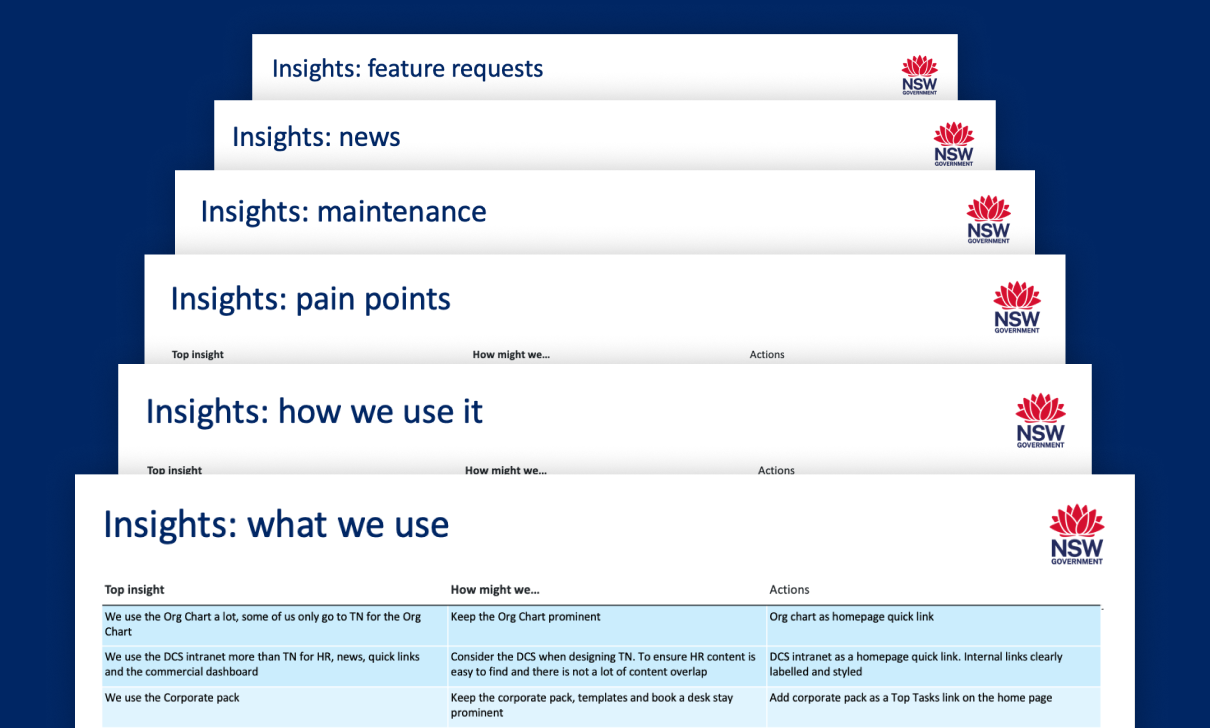
Insights

Insights to actions
The good news was that, although there was plenty of negative feedback, the overall sentiment towards the intranet was positive. Proving our assumption that people across Telco wanted an intranet at all.
Out of the key insights and specific requests we identified actionable goals we could translate into features.
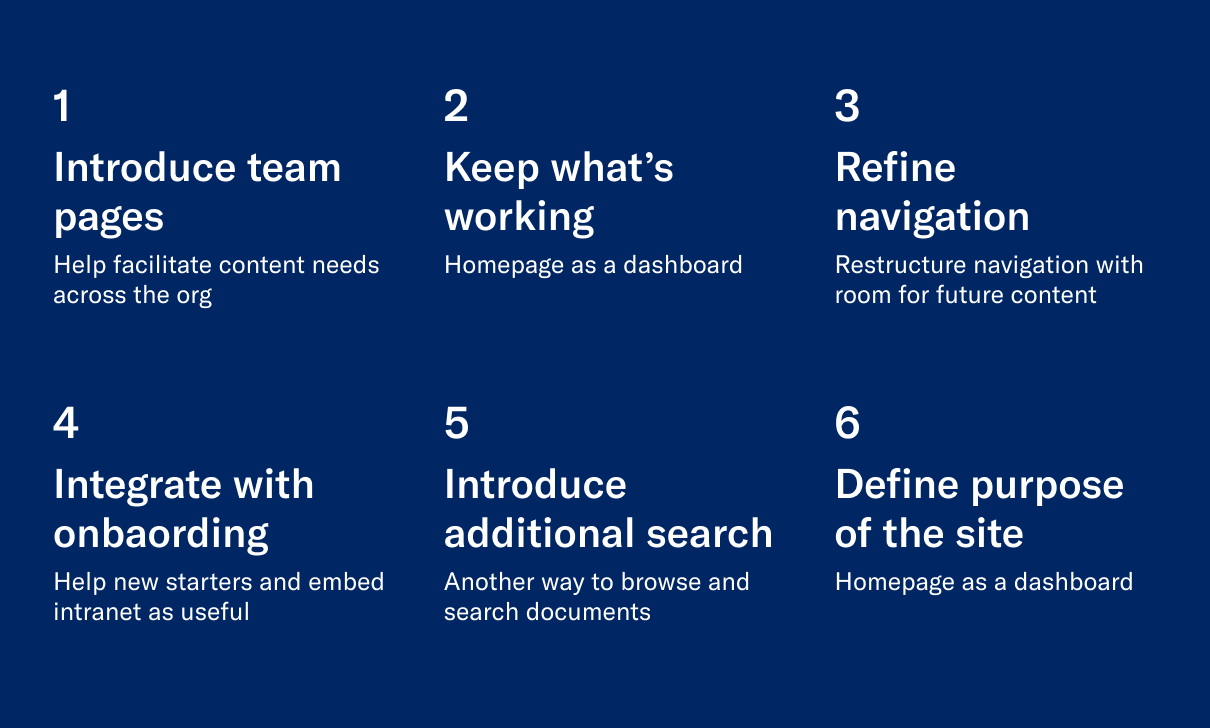
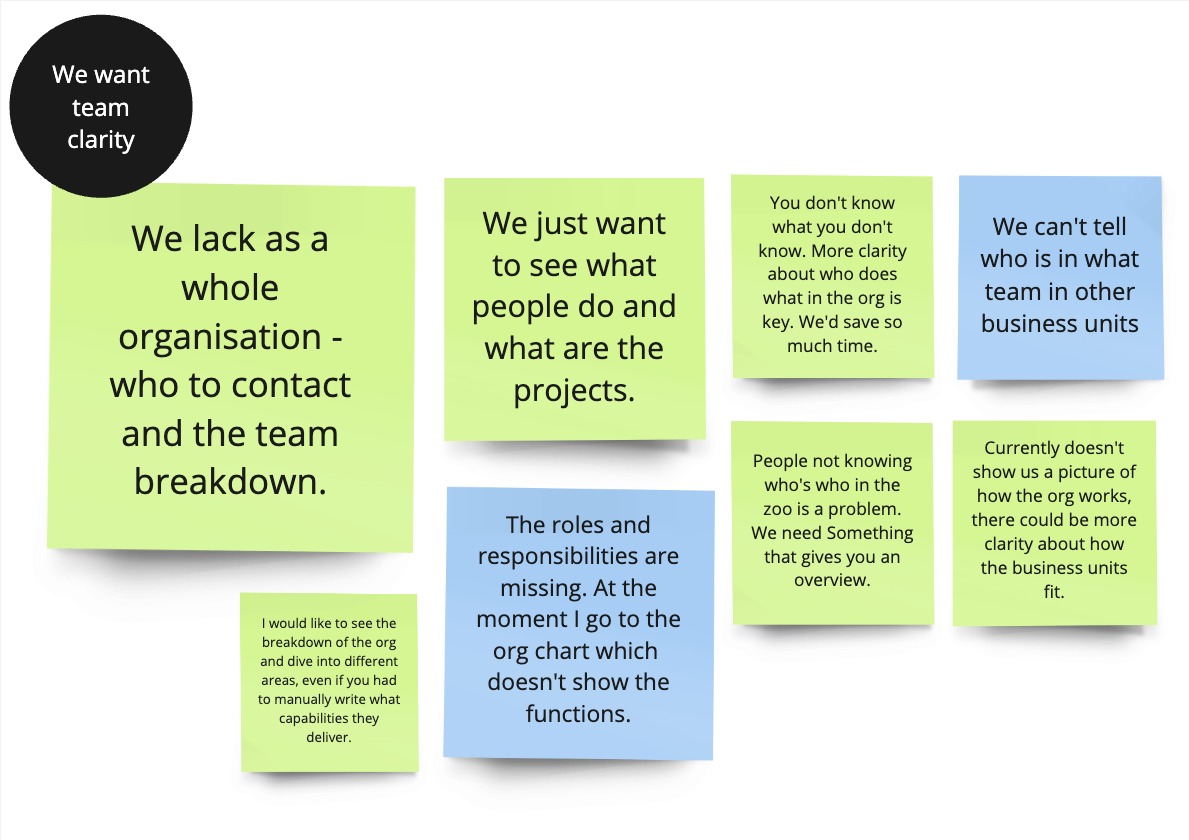
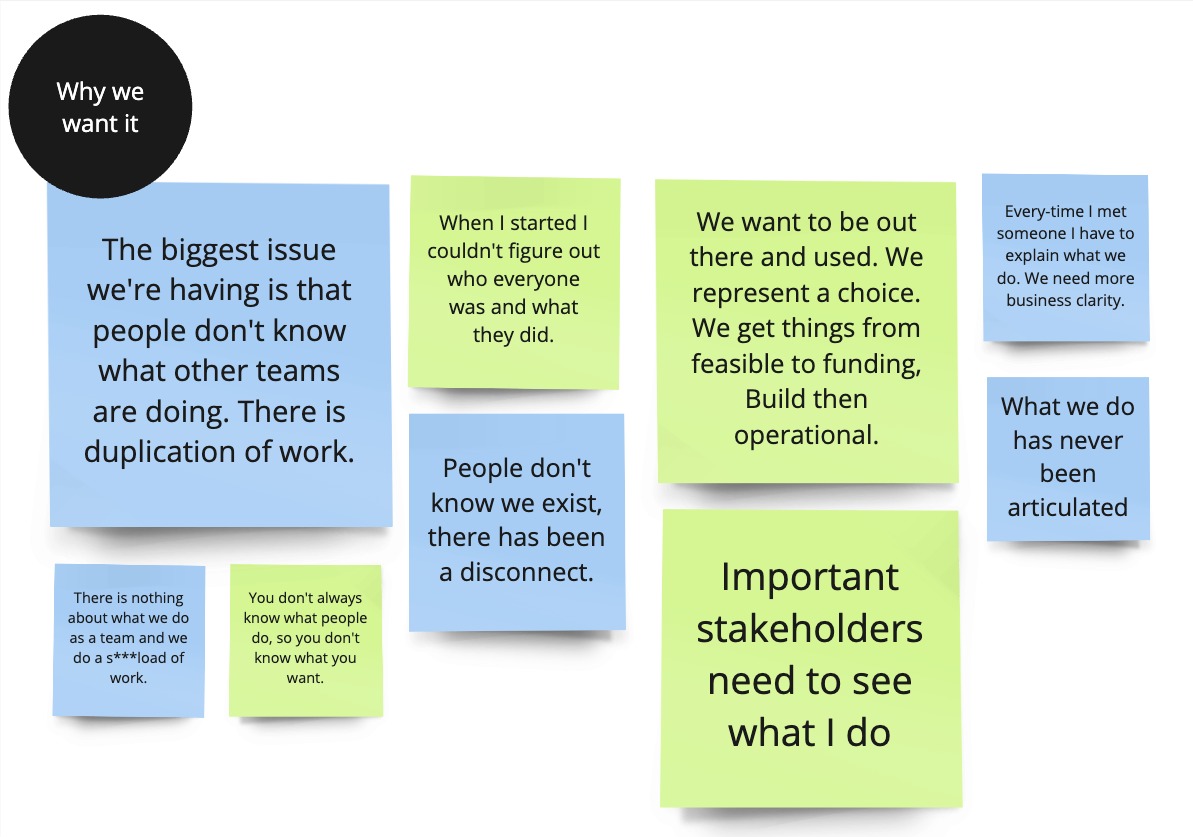
Key insight – we want organisational clarity
Organisation clarity was asked for by roughly 90% of participants. Everything from high level information to individual capabilities. The reasons ranged from acknowledgement of work done and promoting services offered through to breaking down silos and reducing duplication of work.
Gathering and maintaining individual team content was a big task, but impossible to ignore.
Stakeholder re-engagment
We needed senior leader buy-in on the project to proceed. Including business unit information meant we needed teams to contribute.
I presented the top insight and ask back to senior leaders in business unit leadership meetings. Feedback was positive, if sometimes hesitant, and with these approvals sought I could power on with the project plan and the goal of building a useful, sustainable site.
Managing risk
Maintenance
‘Intranets atrophy quickly’ was a memorable comment in the stakeholder interviews. Getting the balance right between what people said they wanted and what could be maintained by the Internal Comms team moving forward mattered.
Additionally we were asking subject matter experts and team members to populate their own content and regularly update it. Motivated teams were already doing this but we were asking over 35 teams to include baseline information about who they were and what they do.
Some actions we took to help mitigate this risk:
- Created governance documentation outlining what should and shouldn’t go on the intranet and who was responsible for updating it
- Video and written training material to increase technical knowledge and confidence
- Automated flags in SharePoint to notify the managing team where content is 4 months old and to prompt content owners
- No custom code
Uptake
How would we be sure that a site refresh would entice those who had lost trust back? People can be habit driven and they have a lot of other software and platforms competing for their attention.
Some actions we took to help mitigate this risk:
- Setting the intranet as the browser start page for all new and existing employees
- Embed it as a useful part of onboarding
- Refer to it more in email and Microsoft Vivia comms
Information architecture
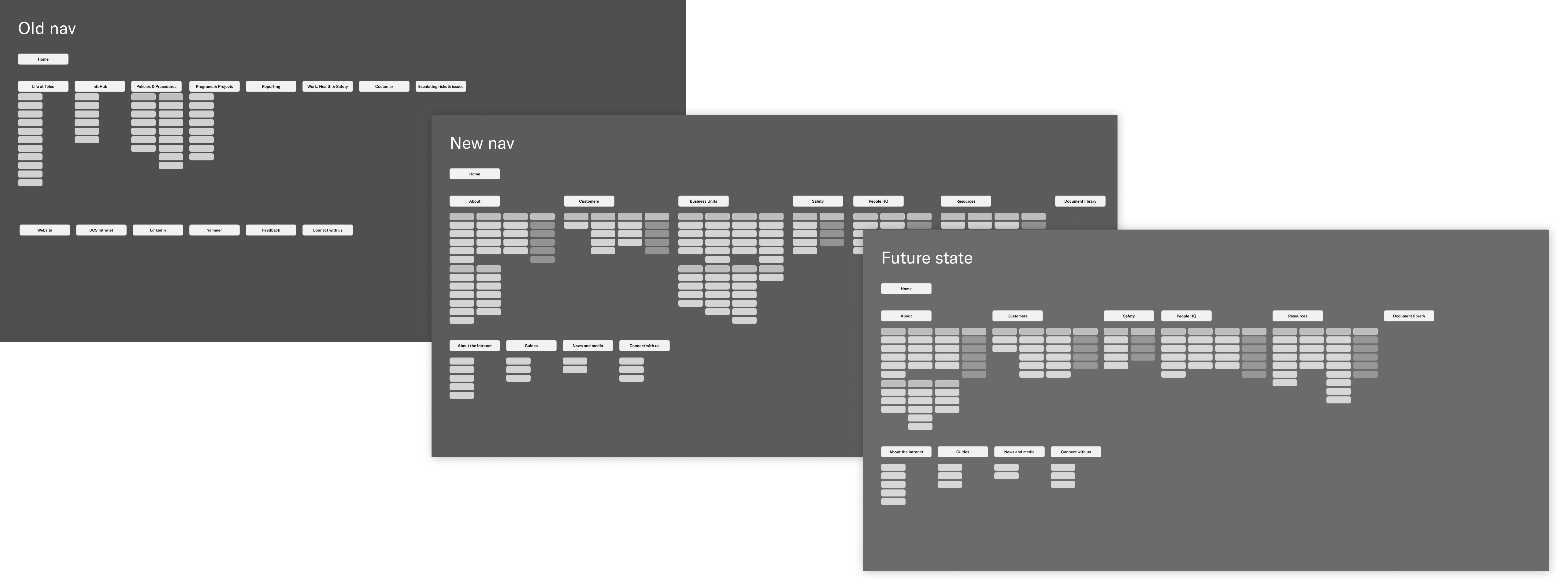
Clear navigation reduces cognitive load. Users reported having to rely on memory rather than intuition. Future proofing the navigation to have clear categories and places for an expanded navigation would help the team handle future content requests. Removing the need to just ‘add it on the end’.
SharePoint’s template restrictions and flat page structure meant common UI devices were out. No breadcrumbs, no highlighted nav elements and no dynamic sub navigation.
I did a card sorting exercise with the working group to establish the baseline categories and continually tested and iterated through the implementation phase.
To help with find-ability of common tasks I worked within the SharePoint meganav to introduce ‘I’d like to…’ navigation columns on each main navigation.
An ‘out of the box’ design approach
SharePoint quirks meant it was hard to accurately reflect layouts in a Figma prototype. I tried. It was more practical to create design options and rapidly iterate directly in a production site.
Through testing, research and consultation it had became clear that ‘out of the box’ approach was essential to the project success. This meant abandoning several features we had proposed in the ideation phase but finding the intersection between desirability and feasibility would give the site greater longevity.
Our design principles were:
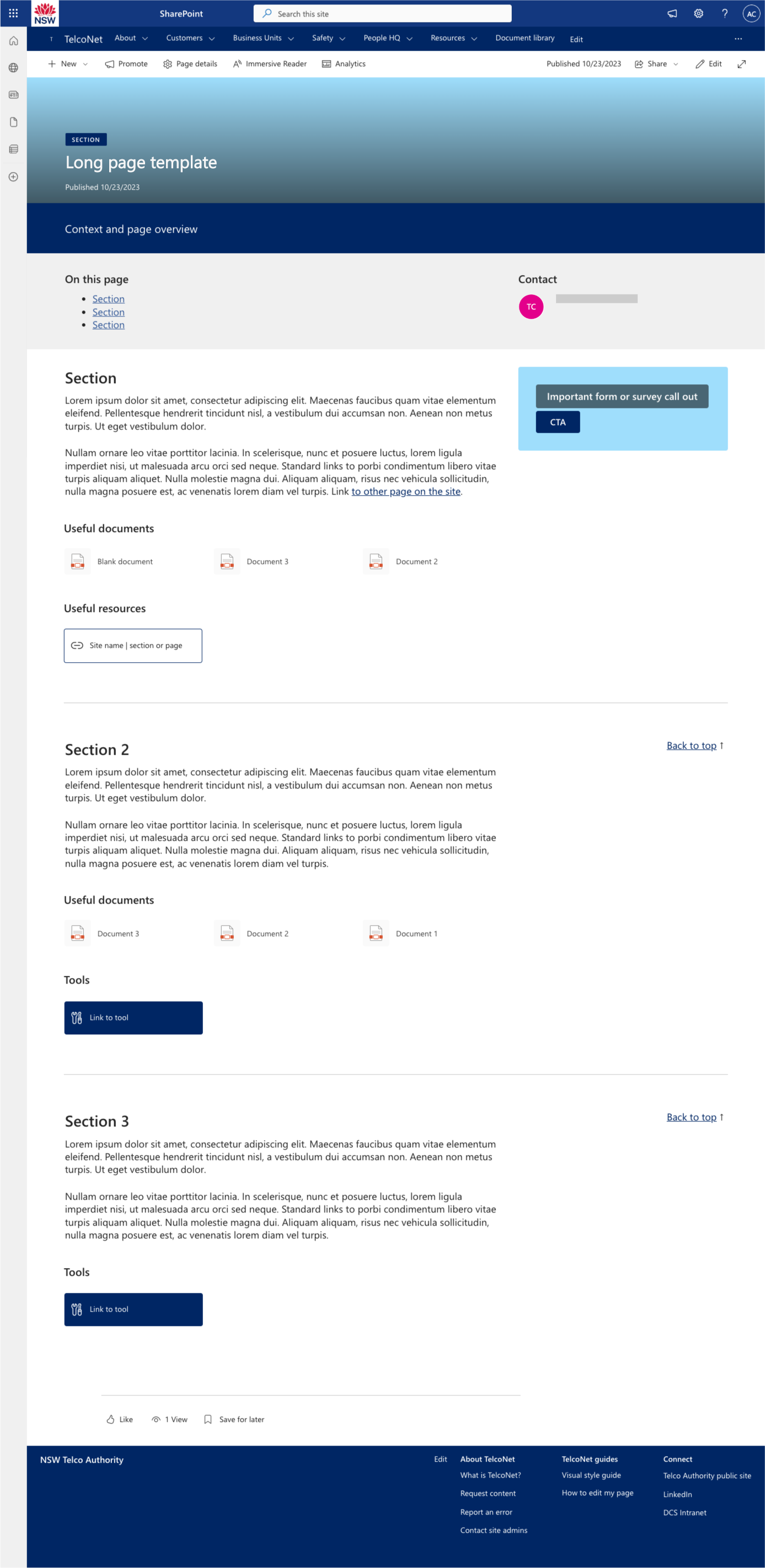
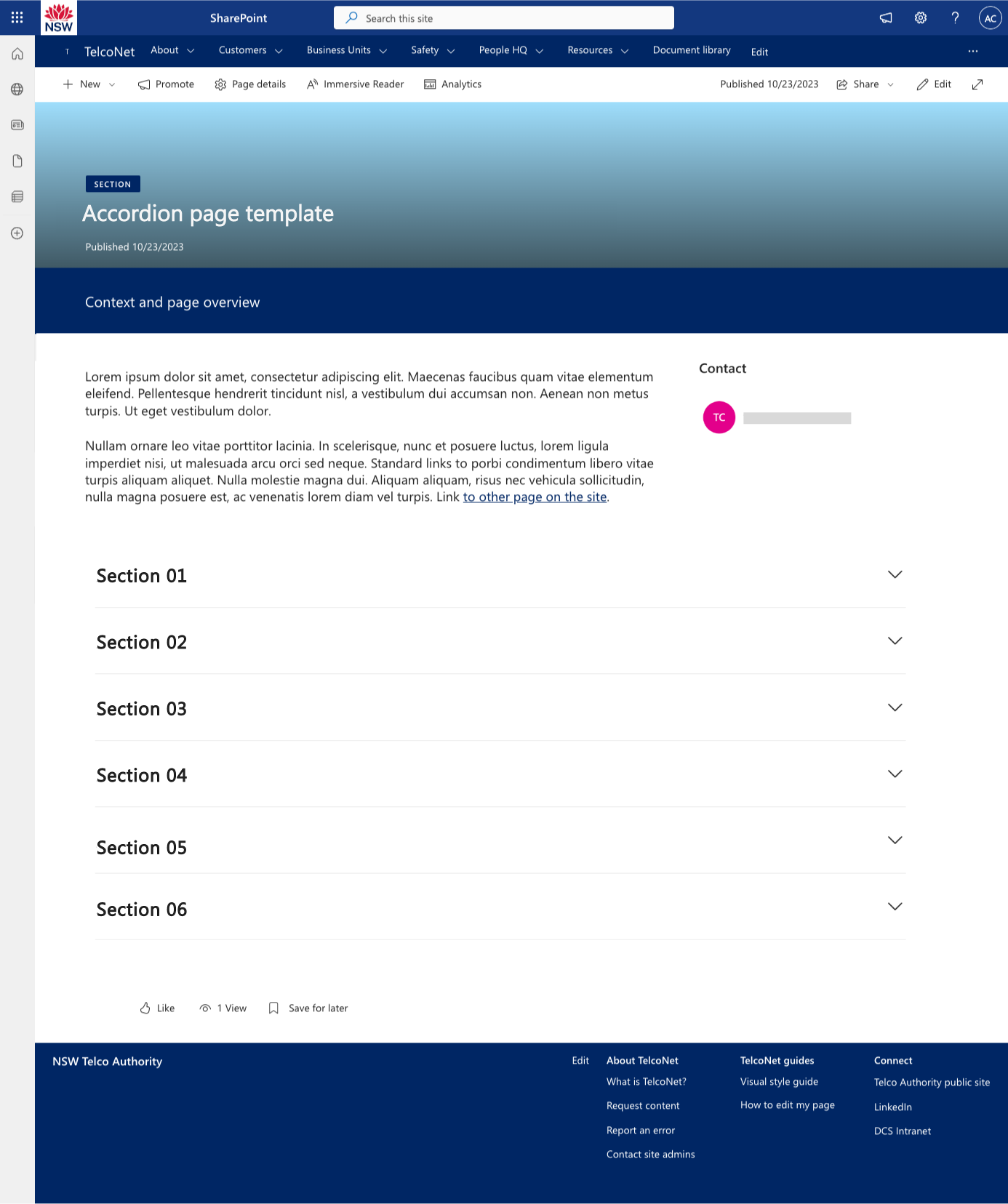
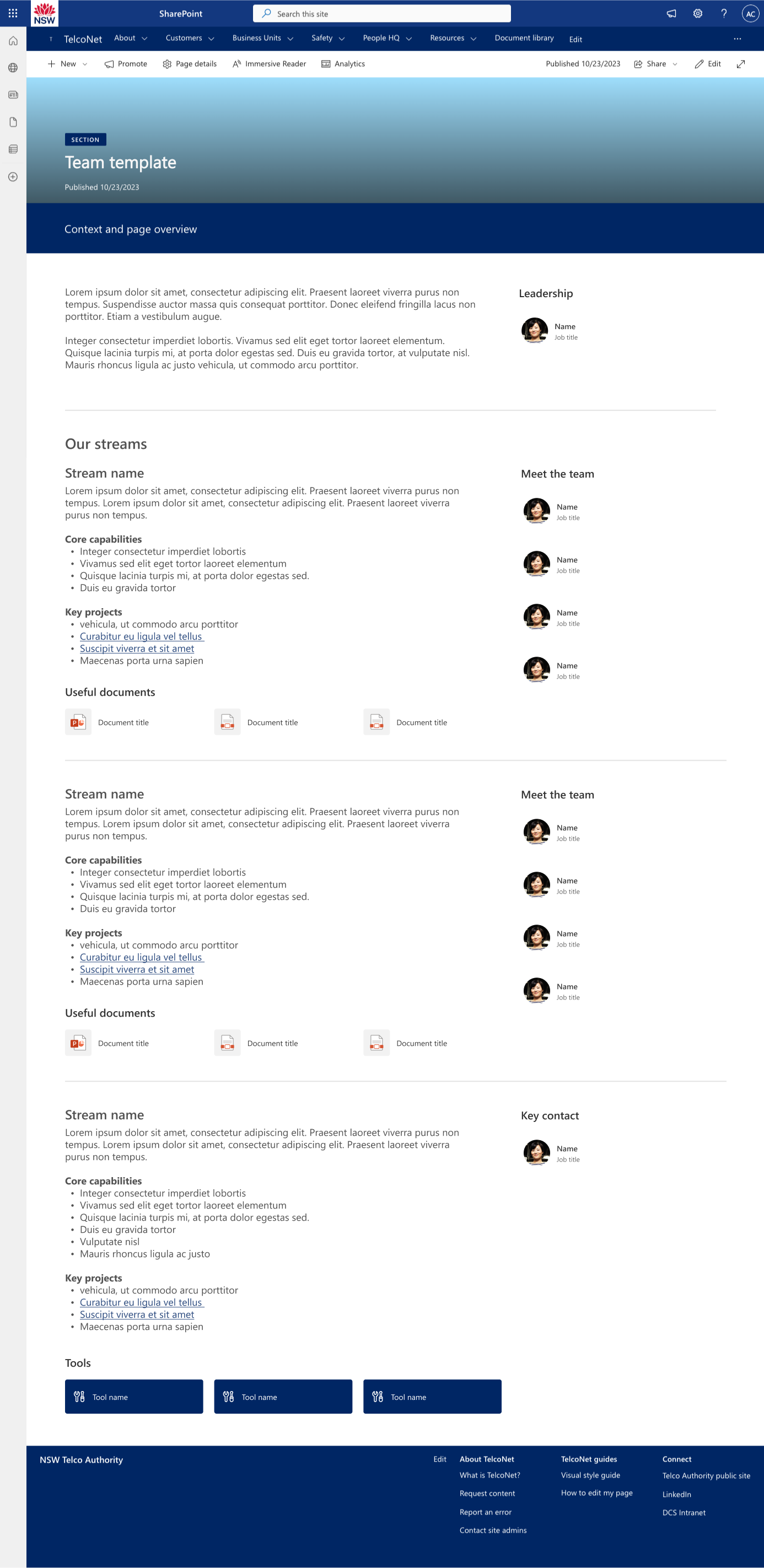
- Less pdfs
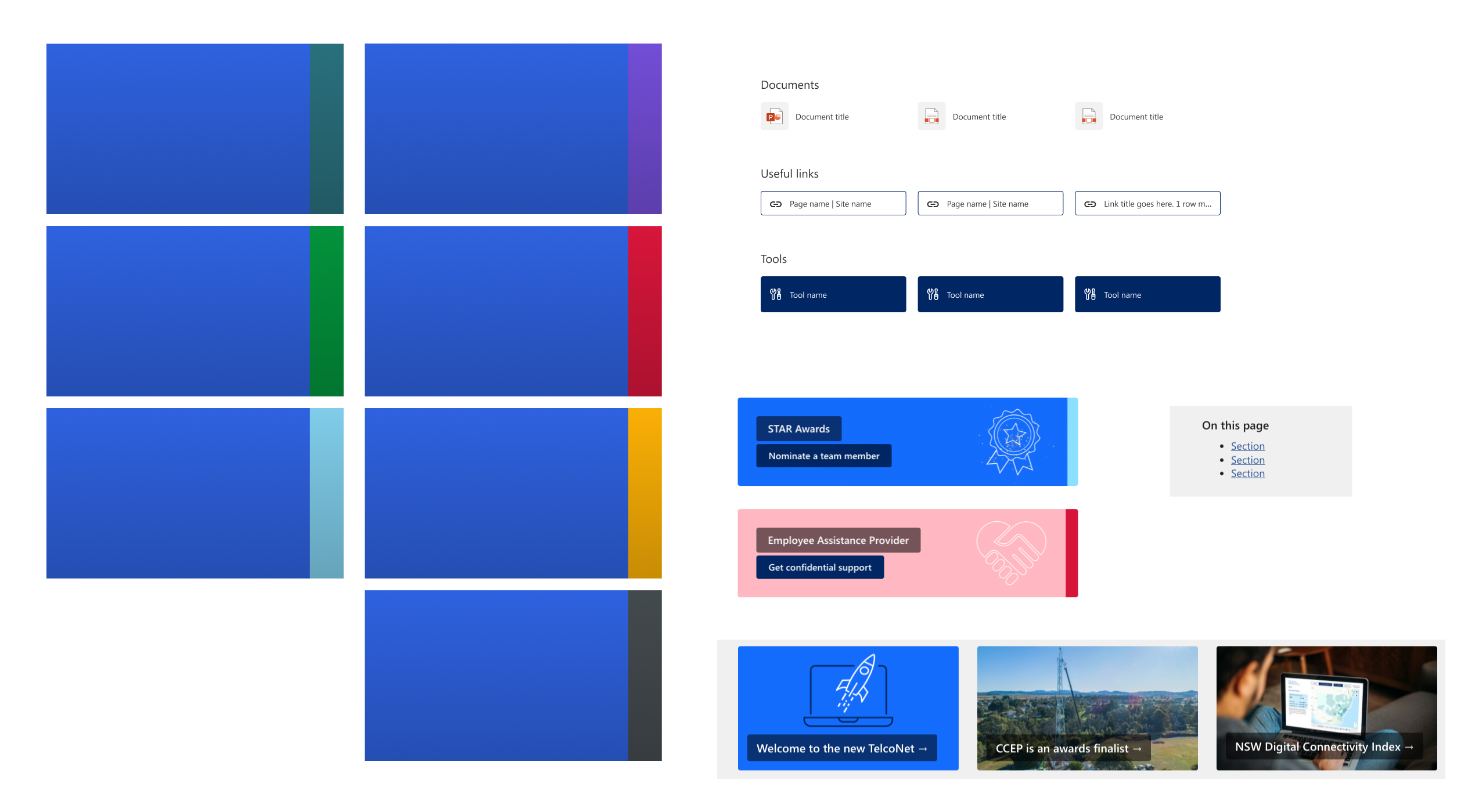
- Clear visual styles for different types of links – documents, external sites and tools
- Consistent anchor links for long pages only
- Out of the box heading styles and page 2/3 – 1/3 layouts
- Guidance around when accordions could be used
- Minimal use of graphics and images for illustration purposes
- A content owner or contact listed on each page
Implementation
The internal comms team pulled together for content rewrites and copy editing, while I gathered copy from teams and worked with subject matter experts to finalise content.
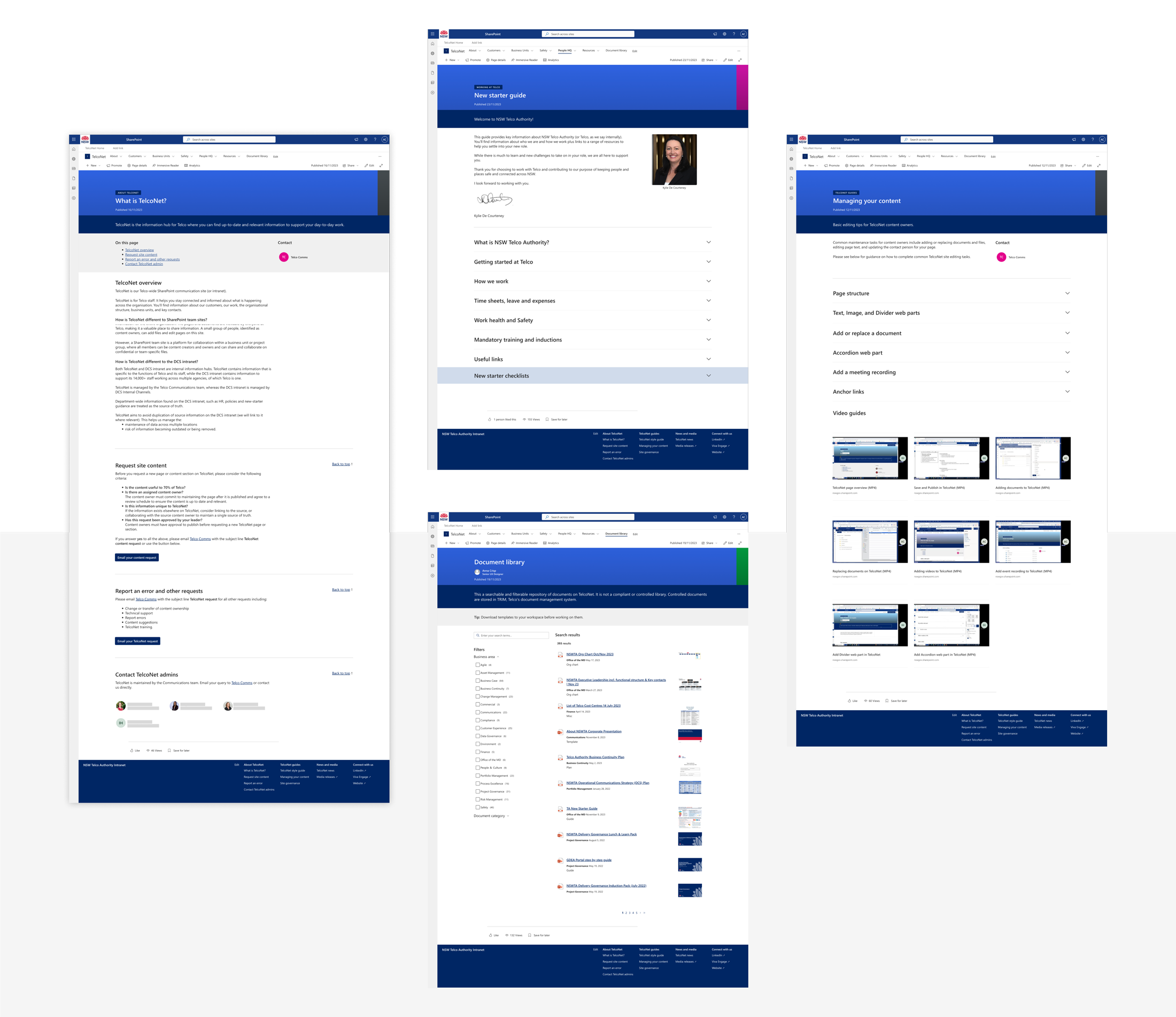
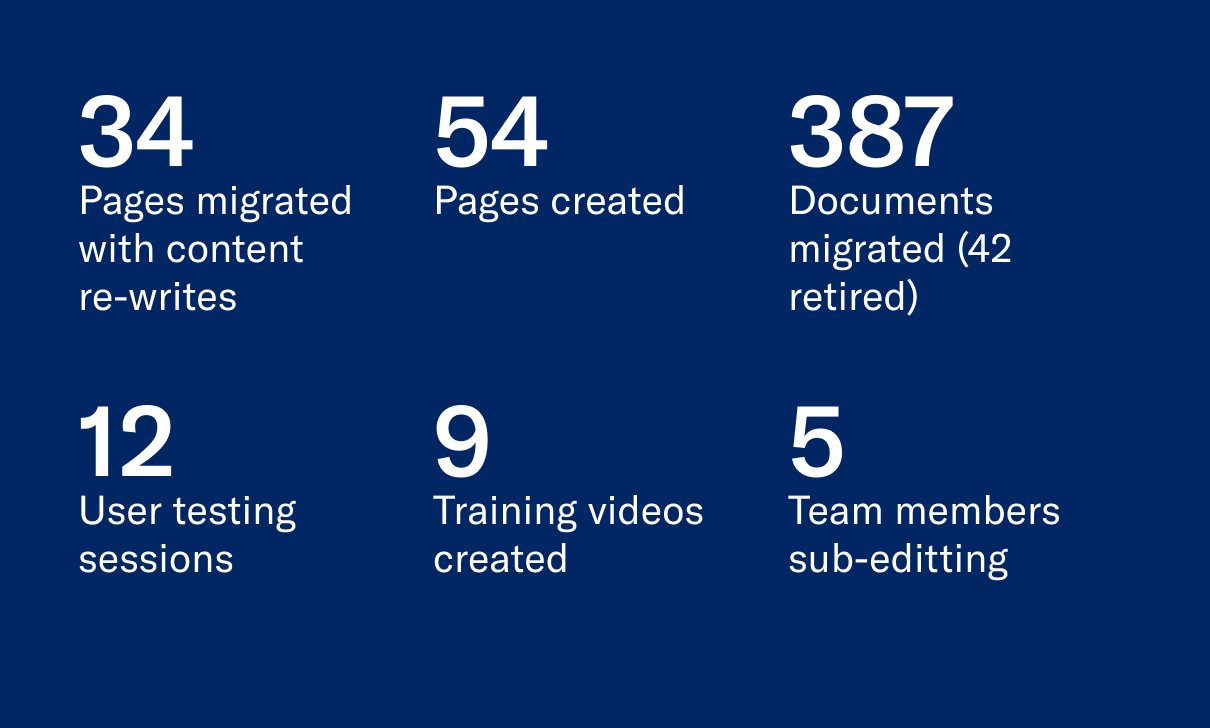
In a perfect world our development site could have transitioned directly into the live site via a redirect. However, in the end, I recommended that we manage the process manually. I carefully copied pages, images, and documents (along with terms, columns and taxonomies) and the team worked to relink images and files and test in the live environment. This proved to be a time-consuming, but low-risk, process and the site was only offline for 1.5 days.
The new site included:
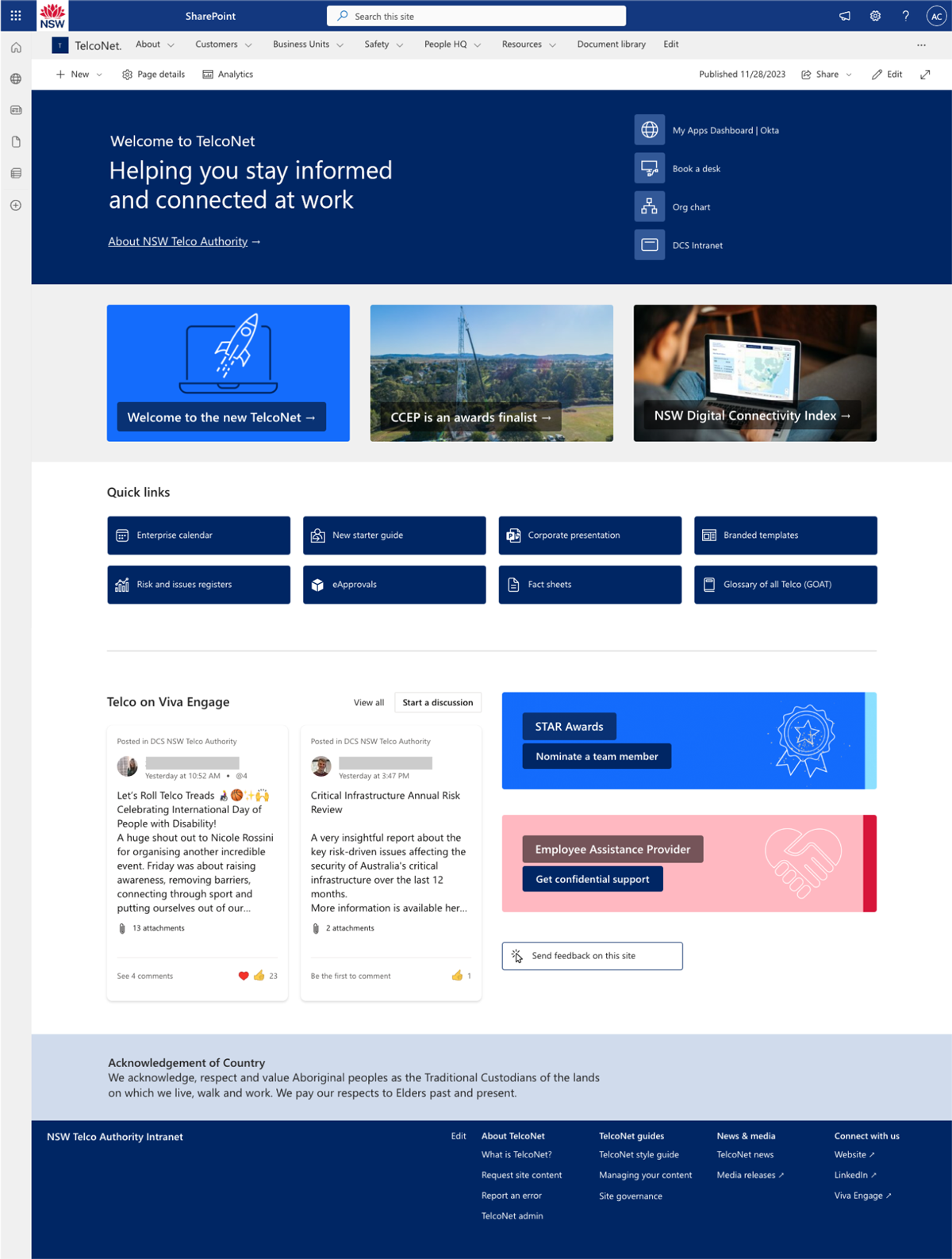
- News and featured content section
- Curated onboarding page
- Improved image library
- CX hub with room for expansion
- Detailed pages for tools and dashboards
- Less pdfs
- A content owner and last updated date on each page
- A page for site governance
- A visual style guide
- Written and video how-to guides
- Automated notification in SharePoint when content is more than 4 months old
- A PnP document search (yay me!)
Outcome
The refreshed intranet was delivered on-time and was well received. Analytics weren’t in place when my contract finished to accurately measure engagement but there was a perception shift.
The team plans to continually maintain and improve the site.
Anna’s UX insights and digital design skills were invaluable over the last six months, as was her cool, calm, collected and considered approach to simplifying the complex and solving problems.
Dave Morrant, Director Customer